
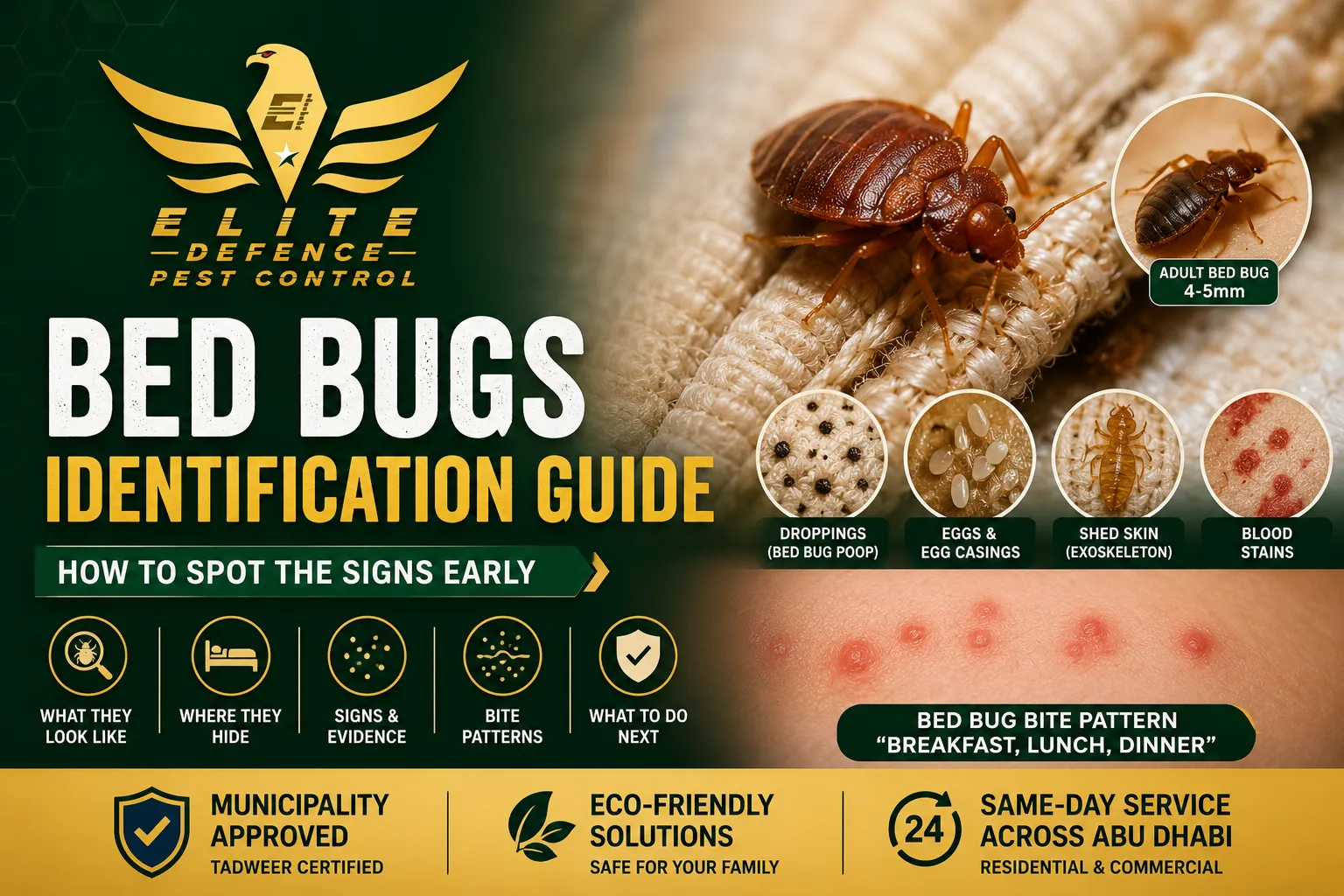
Bed bugs are one of the most common pest problems Abu Dhabi homeowners face, especially in villas, apartments, and hotels. Yet most people don’t know what to look for. The worst part? They’re incredibly easy to miss. By the time you realize you have an infestation, bed bugs have already spread to multiple rooms.
This guide teaches you exactly how to identify bed bugs—what they look like, where to find them, what their bites feel like, and the warning signs that scream “you have an infestation.”
What Do Bed Bugs Actually Look Like? A Real Description
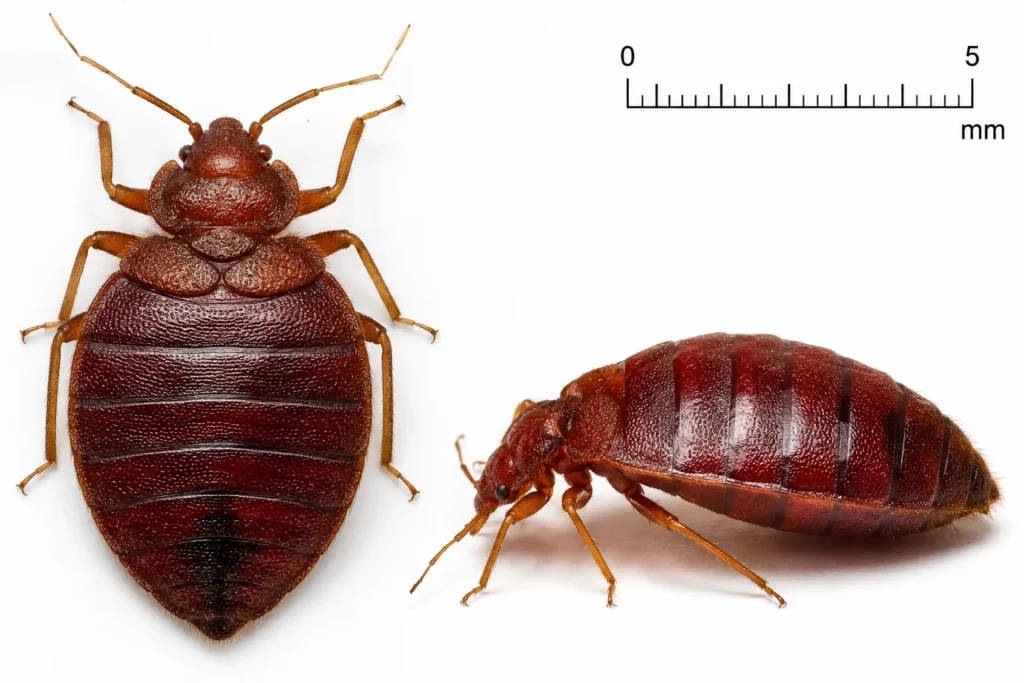
Most people imagine bed bugs as invisible creatures. That’s wrong. Adult bed bugs are visible to the naked eye, though small. Here’s what you’re looking for:
Size & Shape
- Length: 4-5mm (size of an apple seed)
- Width: 1.5-3mm
- Shape: Oval, flattened body (like a disc)
- Movement: Slow crawlers, non-fliers
Color & Appearance
Before feeding: Reddish-brown or mahogany color (sometimes appears darker)
After feeding: Darker red/burgundy (swollen, bloated appearance)
Nymphs (baby bed bugs): Pale yellow or transparent (almost invisible at this stage)
Key identifying feature: Bed bugs have a small head, and their body is much larger than the head. This creates a distinctly “bug-like” appearance.
Real-world comparison: A bed bug looks similar to an apple seed or a small tick, but flatter and more elongated.
Where Do Bed Bugs Hide? The 8 Most Common Locations
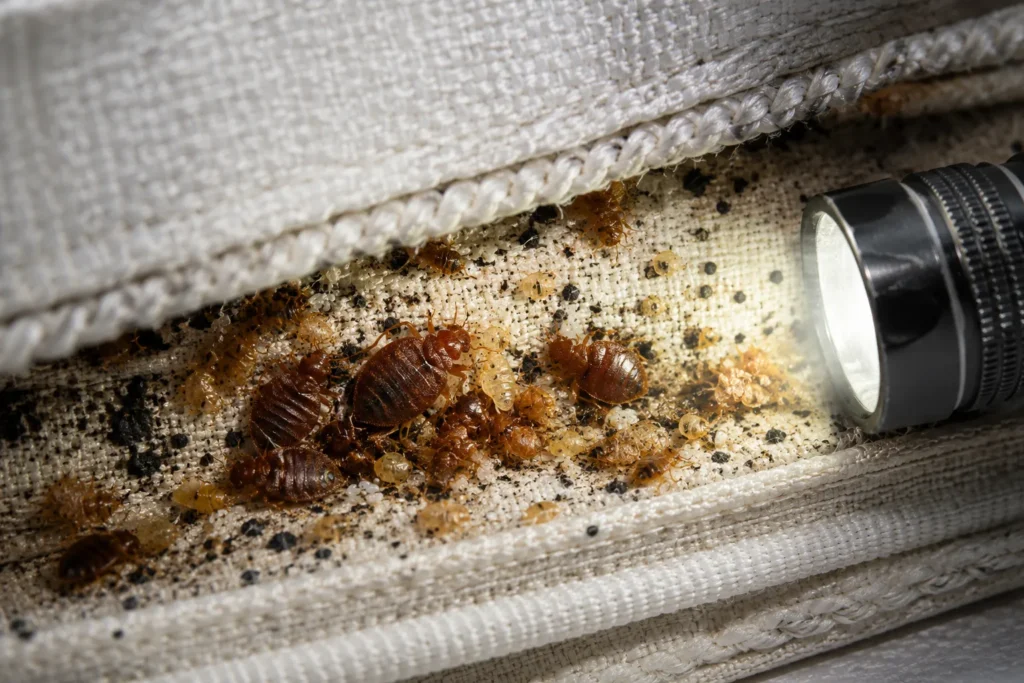
Bed bugs are nocturnal hiders. During the day, they hide in dark, tight spaces close to where you sleep. Here’s where to search:
1. Mattresses & Box Springs (THE HOTSPOT)
Most common location: Bed bug infestations start here because it’s closest to your food source (you).
What to look for:
- Seams and piping along mattress edges
- The corner pockets where the mattress meets the box spring
- Underneath the box spring fabric
- Inside the mattress tufts (button indentations)
How to check: Use a flashlight and a credit card. Shine the light on the seams and use the card to scrape along edges. Look for bugs, droppings, or egg clusters.
2. Bedframe & Headboard
Bed bugs crawl into cracks and crevices in wooden bed frames.
Hotspots:
- Corner joints where wood pieces meet
- Gaps between the frame and wall
- Screw holes and bolt holes
- Behind the headboard
3. Nightstands & Bedside Tables
If you have a nightstand next to your bed, bed bugs move there to hide during the day.
What to check:
- Drawer cracks and crevices
- Underside of the table
- Any gaps between the table and wall
4. Bedside Lamp & Electrical Outlets
Bed bugs seek warm places. Electrical outlets and light fixtures generate heat.
Check:
- Lamp bases
- Electrical outlets on the wall
- Alarm clock crevices
5. Behind Baseboards & Wall Cracks
Once an infestation spreads beyond the bed, bed bugs hide in wall cracks and behind baseboards.
This is a sign of serious infestation.
6. Closets & Clothing
Bed bugs can hide in:
- Folds of stored clothing
- Closet shelves
- Coat pockets
7. Furniture in Other Rooms
If you sit on your couch, bed bugs can hide there too. They move to any furniture near where you rest for extended periods.
8. Luggage & Travel Items
If you’ve recently traveled, bed bugs could be hiding in your suitcase or travel bag.
The 5 Visual Signs of Bed Bugs Every Abu Dhabi Homeowner Must Know
Before you see an actual bed bug, look for these evidence markers:
1. Fecal Droppings (Bed Bug Poop)
What it looks like: Tiny black or dark brown dots
Size: 1-3mm (smaller than a pinhead)
Where found: On mattress seams, bedding, pillowcases, and surrounding areas
Distinctive feature: Droppings often appear in small clusters or lines, like a dot-to-dot pattern
Real-world analogy: Looks like fine black pepper scattered on your sheets
How to confirm: If you find black dots, they’ll smudge slightly if you rub them with a damp cloth (because it’s digested blood).
2. Bed Bug Eggs & Egg Casings
What they look like: Tiny white or cream-colored oval shapes
Size: 1mm (almost invisible)
Where found: In mattress seams, bedframe crevices, anywhere bugs hide
Appearance: Smooth, barrel-shaped with a cap on one end
Why this matters: Eggs hatch in 6-10 days. If you see eggs, you have an active infestation.
3. Dead Bed Bug Skins (Exoskeletons)
What it is: When baby bed bugs (nymphs) grow, they shed their outer skin
What it looks like: Transparent or translucent brown shells, same shape as a bed bug but empty
Size: 1-5mm
Where found: Mattress seams, bedframe crevices
Why this matters: Skins indicate nymphs are growing into adults. This means the infestation is active and reproducing.
4. Blood Smears & Rusty Spots
What it is: Your blood or bed bug blood on sheets
What it looks like: Dark red or brown stains
Where found: On pillowcases, sheets, mattress edges
Cause: When you accidentally crush a fed bed bug during sleep, blood leaks out
Real-world scenario: You wake up, turn over, and squash a bed bug that just fed on you. This leaves a visible bloodstain.
5. Musty Odor
What it is: A distinct smell from bed bug scent glands
What it smells like: Sweet, musty, unpleasant odor (some describe it as “rotten raspberries”)
When noticeable: Usually only in heavy infestations with hundreds of bugs
Sensitivity varies: Not everyone can smell it, but if you notice an unusual odor near your bed, investigate.
Bed Bug Bite Patterns: The Signs On Your Skin
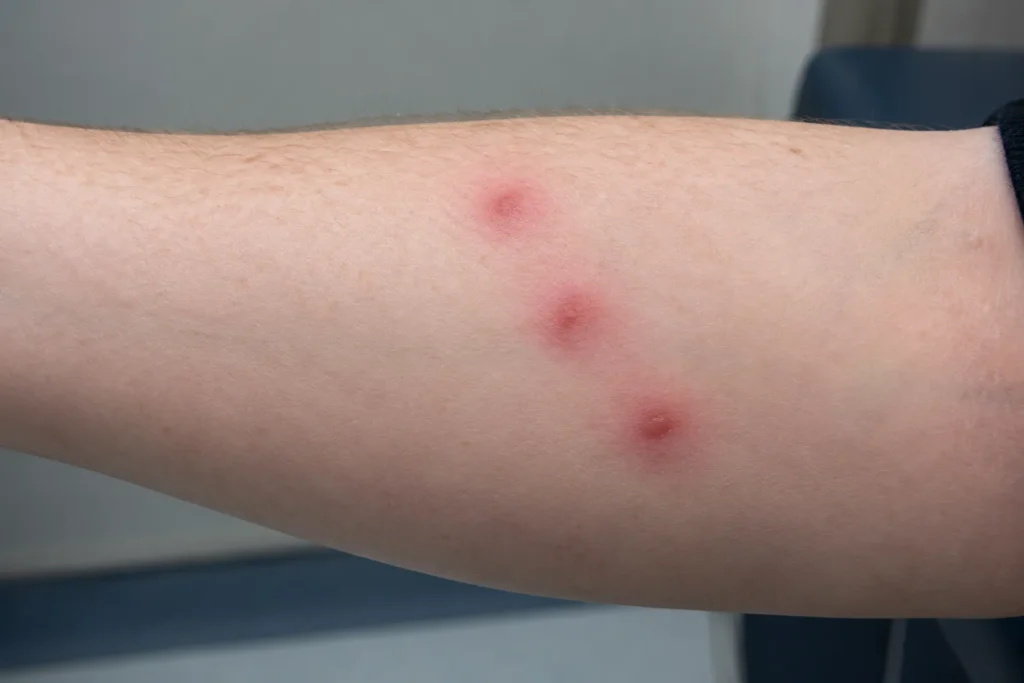
Bed bug bites are often the first warning sign that you have an infestation. Here’s how to recognize them:
What Bed Bug Bites Look Like
Appearance: Small, raised, itchy red welts
Size: 2-5mm diameter
Shape: Round or slightly oval
Color: Red with possible darker red center
Texture: Slightly swollen, firm to touch
The “Breakfast, Lunch, Dinner” Pattern
One distinctive feature: Bed bugs often bite in a line or cluster of 3 bites. This happens because:
- The bug finds a blood vessel, starts feeding
- Gets disturbed or moves slightly
- Finds another spot nearby, bites again
- Repeats once more
Result: 3 bites in a line or triangle pattern = classic bed bug signature
Where Bites Appear
Most common: Exposed skin during sleep:
- Arms and hands
- Neck and shoulders
- Legs and ankles
- Face and ears
Pattern: Usually on one side of the body (the side facing the mattress)
Important: NOT Everyone Reacts The Same
This is crucial: Some people don’t react to bed bug bites at all. You might be bitten 10 times and see nothing. Meanwhile, your partner breaks out in welts.
Why: Individual immune system response varies. Some people’s skin doesn’t recognize the bed bug’s saliva as an allergen.
Implication: Lack of bites does NOT mean you don’t have bed bugs. You could still be infested.
Bite Timeline
- First exposure: Can take 3-7 days to appear
- Repeated bites: May appear within 24 hours
- Itch sensation: Can last 1-2 weeks
The 6-Step Bed Bug Inspection: How To Search Your Home Systematically
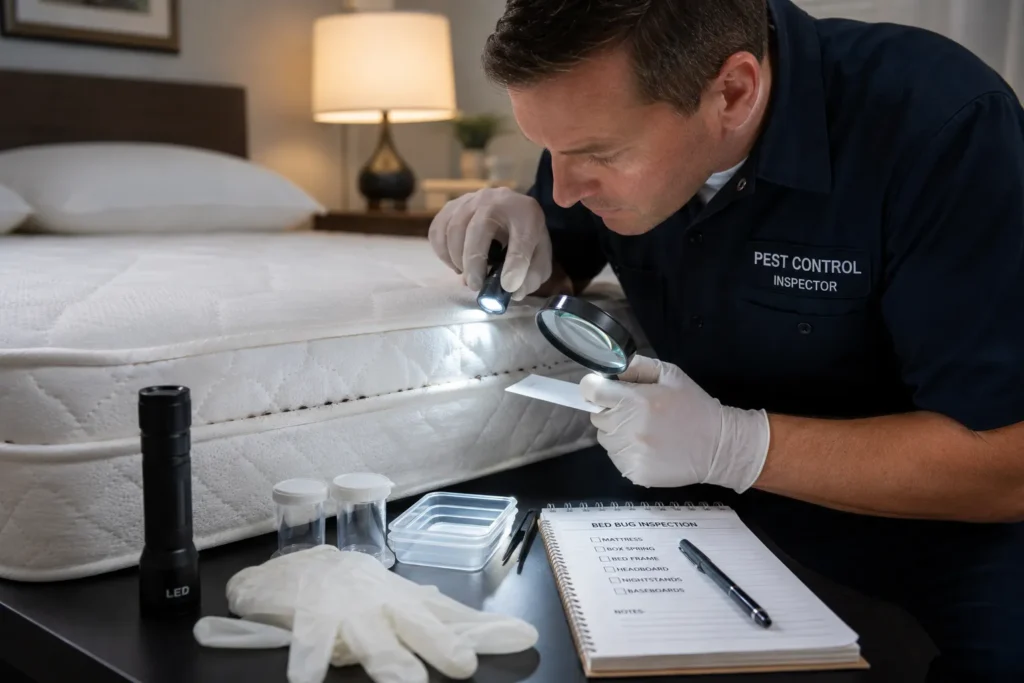
If you suspect bed bugs, use this method to do a thorough inspection:
Step 1: Gather Your Tools
- Flashlight or phone flashlight
- Credit card or hard plastic scraper
- Magnifying glass (optional but helpful)
- Small containers or bags (to collect samples if found)
- Gloves (optional)
Step 2: Start With The Bed (Most Likely Location)
- Remove all bedding (sheets, pillows, blankets)
- Examine the mattress seams with flashlight—look along all four edges
- Check the corners where mattress meets box spring
- Inspect the box spring bottom using the credit card to scrape seams
- Look under the mattress (use flashlight to see underneath)
What to look for: Live bugs, dead bugs, droppings, eggs, shed skins
Step 3: Check The Bedframe
- Examine wooden joints and corners
- Look in screw holes and bolt holes
- Check behind the headboard
- Inspect gaps between frame and wall
Step 4: Inspect Surrounding Furniture
- Nightstands and bedside tables
- Lamps and alarm clocks
- Behind baseboards in the bedroom
- Any cracks in walls near the bed
Step 5: Check Other Rooms
- Couch and armchairs where you sit
- Bedroom closet clothing and shelves
- Other sleeping areas (guest beds, couches)
Step 6: Document Your Findings
- Take photos with flash (helps see small details)
- Note the location of any findings
- If you find bugs, don’t crush them—collect in a bag for professional inspection
Are Those Really Bed Bugs? Common Look-Alikes In Abu Dhabi
Before you panic, make sure it’s actually a bed bug. Several pests look similar:
Dust Mites vs. Bed Bugs
Dust mites: Microscopic (you can’t see them)
Bed bugs: Visible to naked eye
Distinction: If you can see it, it’s not a dust mite
Carpet Beetles vs. Bed Bugs
Carpet beetles: Oval, but have visible hair/bristles, often colorful patterns
Bed bugs: Smooth, reddish-brown, no visible hairs
How to tell: Carpet beetles look “fuzzy” under magnification; bed bugs look smooth
Lice vs. Bed Bugs
Lice: Found on hair/scalp, much smaller (1-3mm)
Bed bugs: Found on mattresses/furniture, larger (4-5mm)
Location difference: Lice stay on your body; bed bugs hide in furniture
Fleas vs. Bed Bugs
Fleas: Smaller, darker, more active/jumping
Bed bugs: Larger, slower moving, don’t jump
Pet connection: Fleas come from pets; bed bugs don’t
Ticks vs. Bed Bugs
Ticks: Have 8 legs (arachnid), often from outdoors
Bed bugs: Have 6 legs (insect), from indoor spaces
How Bed Bugs Get Into Your Home: 6 Real Scenarios
Understanding how bed bugs enter helps you prevent future infestations:
1. Travel & Hotels
Most common source (~70% of Abu Dhabi cases)
How it happens:
- You stay at a hotel with bed bugs
- Bugs crawl into your suitcase or clothing
- You bring them home
Hotels at risk: Even 5-star hotels can have bed bugs. They’re not a cleanliness issue.
2. Visiting Someone Else’s Home
- You visit a friend or family member with bed bugs
- Bugs transfer to your clothing or bag
- You unknowingly bring them home
3. Used Furniture
Second-hand mattresses, couches, chairs are common sources.
Why: You don’t know the history of used furniture. It could be harboring hidden bed bugs.
4. Visitors & Guests
If a friend or family member visits from an infested home, they could unknowingly bring bed bugs in their luggage.
5. Neighboring Properties
In apartment buildings, bed bugs can spread through:
- Shared walls
- Electrical outlets between units
- Plumbing areas
- Common hallways
6. Delivery Boxes & Packages
Less common but possible: Bed bugs can hide in cardboard boxes delivered to your home.
The 3 Stages of Bed Bug Infestation: What To Expect
Stage 1: Early Detection (1-2 Weeks)
What’s happening: You find 1-5 bed bugs or notice a few bites
Actions needed NOW:
- Confirm it’s actually bed bugs
- Contact a professional immediately
- Don’t panic or spray yourself (ineffective)
Why it matters: Catching bed bugs at this stage means much faster treatment and lower cost.
Stage 2: Developing Infestation (2-4 Weeks)
What’s happening:
- You see multiple bugs
- Bites increase
- Find droppings and eggs
- Musty odor may appear
Danger: Bed bugs are reproducing. Females lay eggs daily.
Stage 3: Heavy Infestation (1+ Months)
What’s happening:
- Hundreds of bed bugs across multiple rooms
- Severe bites
- Obvious musty smell
- Visible blood on sheets
- Multiple areas of your home affected
Critical: Professional treatment becomes urgent.
Quick Identification Checklist: Do You Have Bed Bugs?
Use this checklist to assess your situation:
Physical Signs: ☐ Red, itchy bite clusters (especially in lines of 3)
☐ Found small bugs (4-5mm, reddish-brown) on mattress
☐ Black dots on sheets or mattress seams
☐ Tiny white dots or shells in seams
☐ Rusty/blood stains on pillowcase
☐ Musty, sweet odor near bed
Behavioral Signs: ☐ Bites appear after sleeping
☐ Bites worse on one side of body
☐ Bites itch intensely
☐ New bites appear daily
Risk Factors: ☐ Recently traveled
☐ Bought used furniture recently
☐ Live in multi-unit building
☐ Had visitors from other cities
Result:
- 3+ checks = Likely bed bug infestation
- Get professional inspection immediately
What NOT To Do (Common Mistakes Abu Dhabi Residents Make)
❌ Don’t Use Store-Bought Bug Sprays Alone
Why: Bed bugs have developed resistance. DIY sprays rarely work completely. You need professional-grade treatment.
❌ Don’t Throw Out Your Mattress Immediately
Why: You might spread bed bugs to your trash and neighborhood. Professional treatment can often save the mattress.
❌ Don’t Panic-Clean Everything At Once
Why: Aggressive cleaning disperses bed bugs to new areas. Targeted treatment works better.
❌ Don’t Wait “To See If It Gets Worse”
Why: Each day you wait, the infestation doubles. A few bugs today = hundreds next week.
❌ Don’t Assume It’s a Hygiene Problem
Why: Bed bugs aren’t caused by dirty homes. Even spotless homes get infestations. This is a common misconception.
What TO Do: The Right Response When You Suspect Bed Bugs
Immediate Actions (Today)
- Confirm the identification
- Search your mattress thoroughly
- Look for multiple signs (bites + droppings + bugs)
- Take clear photos with flash for reference
- Don’t treat it yourself yet
- Professional inspection is more accurate
- Wrong treatment wastes time and money
- Prepare for professional inspection
- Remove clutter around bed
- Pull bed away from walls
- Have your photos ready
Next 24-48 Hours
- Contact Elite Defence Pest Control
- Call: +971 55 906 9032
- WhatsApp for quick response
- Email: info@elitedefencepestcontrol.ae
- Prepare for the inspection
- Clear access to bedroom
- Have mattress and furniture accessible
- Note when bites started
- Mention any recent travel
Professional Bed Bug Treatment in Abu Dhabi
Once you’ve identified bed bugs, professional treatment is the most effective solution. Elite Defence Pest Control provides:
Heat Treatment
- Raises room temperature to lethal levels for bed bugs
- Kills all life stages (eggs, nymphs, adults)
- No chemical residue
- Learn more about heat treatment for bed bugs
Chemical Treatment
- Eco-friendly, municipality-approved products
- Safe for children and pets
- Applied to specific areas
- Multiple applications for complete elimination
Integrated Pest Management (IPM)
- Combines heat + chemical methods
- Includes monitoring and follow-ups
- Prevents re-infestation
All treatments are performed by certified technicians. Our team follows municipality regulations to ensure your safety.
How Long Does Bed Bug Identification & Treatment Take?
Professional Inspection
- Time: 30-45 minutes
- What happens: Inspector checks all common hiding spots, documents findings
Treatment Execution
- First treatment: 2-4 hours depending on home size
- Follow-up visits: Usually 2-3 additional visits
- Total timeline: 2-4 weeks for complete elimination
Your Role During Treatment
- Prepare the bedroom (clear clutter)
- Remove pets from treatment area
- Don’t re-enter treated spaces until safe (follow professional instructions)
Prevention: How To Avoid Bed Bugs In The Future
After treatment, prevent re-infestation:
When Traveling
- Inspect hotel room before unpacking
- Keep suitcase away from floor/furniture
- Use luggage racks or bathroom
- Inspect clothing before packing to return home
- Wash all travel clothes in hot water immediately
With Used Furniture
- Inspect thoroughly before bringing home
- Avoid mattresses unless you can verify source
- Check seams, underside, and all crevices
- Consider heat treatment for used items
In Your Home
- Regular mattress inspections (monthly)
- Vacuum mattresses monthly
- Wash bedding in hot water weekly
- Caulk cracks in walls and baseboards
- Check new visitors’ belongings if they’re traveling from other cities
Related Pest Prevention
While checking for bed bugs, also be aware of other pests common in Abu Dhabi:
- Cockroach control — Also hide in dark spaces
- Ant control — Can infest bedrooms seeking warmth
- Rodent control — Can be found in multiple areas
- Mosquito & fly control — Seasonal issues in Abu Dhabi
Bed Bug FAQs: Answers To Common Questions
Q: Can bed bugs transmit diseases?
A: No documented disease transmission from bed bugs, but bites can become infected from scratching. The main issue is sleep disruption and psychological distress.
Q: How fast do bed bugs reproduce?
A: A female lays 1-3 eggs per day. Eggs hatch in 6-10 days. Nymphs mature in 4-6 weeks. In perfect conditions, a single female can create 500+ offspring in 6 months.
Q: Do bed bugs bite every night?
A: Not necessarily. Bed bugs feed every 3-7 days, but each feeding involves multiple bites.
Q: Can I get rid of bed bugs myself?
A: Difficult without professional help. Most DIY treatments fail because:
- People miss hidden bugs in hard-to-reach areas
- Store-bought sprays aren’t strong enough
- Bed bugs have developed resistance
- Professional-grade heat or chemicals are needed
Q: Is it embarrassing to have bed bugs?
A: No. Bed bug infestations happen to clean, wealthy, and poor households alike. It’s a pest problem, not a reflection of your home or lifestyle.
Q: How much warning does a bed bug bite give before appearing?
A: Bites can take 1-14 days to appear. Some people react immediately; others react much later.
Key Takeaways: How To Identify Bed Bugs
- Visual identification: Look for 4-5mm reddish-brown oval bugs with flattened bodies
- Most likely location: Mattress seams and bedframe (start your search here)
- Supporting evidence: Fecal droppings, eggs, shed skins, bites in lines of 3
- Don’t delay: Contact professionals immediately if you suspect infestation
- Prevention is key: Inspect mattresses monthly and carefully inspect after travel
Ready To Get Professional Help?
If you’ve identified bed bugs in your Abu Dhabi home, don’t wait. Professional treatment eliminates infestations in 2-4 weeks.
Elite Defence Pest Control provides certified, municipality-approved bed bug treatment:
- Free inspection and assessment
- Same-day service available
- Eco-friendly treatment options
- 100% results guaranteed
- 24/7 emergency support
Contact Us Today:
- Phone: +971 55 906 9032
- WhatsApp: Direct message us
- Email: info@elitedefencepestcontrol.ae
- Coverage: All areas of Abu Dhabi including Mussafah, Khalifa City, MBZ City, and beyond
Serving Abu Dhabi’s homeowners and businesses with professional pest control solutions since 2015.