
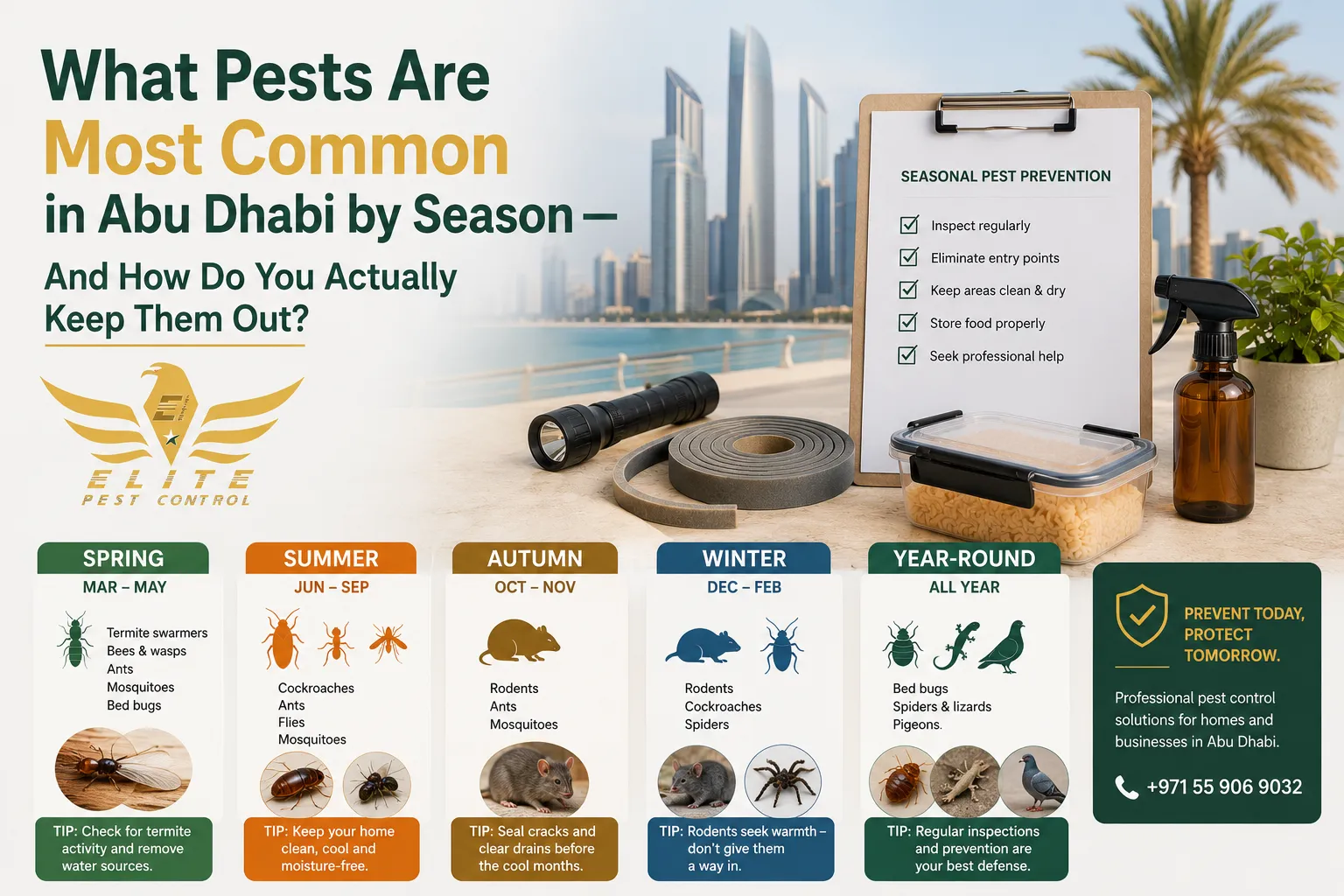
Abu Dhabi doesn’t follow the same pest calendar as the rest of the world. You won’t find articles telling you to “watch out for pests in autumn” making much sense here — because our autumn is basically a relief. It’s the scorching June and the humid August that turn apartments into insect highways.
If you’ve lived in the UAE for even a year, you already know this. You know the feeling of turning on the kitchen light at 2am and catching a cockroach the size of a thumb sprinting across the counter. You know the mosquito bites that appear out of nowhere after the first summer rain. And if you’ve gone through a termite swarm season, you probably haven’t forgotten the flying ants descending on every lit window in March.
The good news? Each season brings different pests — and different prevention strategies. Once you know what’s coming and when, you’re already ahead of 90% of homeowners in Abu Dhabi.
This guide breaks down exactly what pests are active in each season, why they show up, what signs to look for, and what you can do before and after an infestation takes hold. We’ll cover everything from the common cockroach to termites, rodents, bed bugs, and the seasonal wasp swarms that catch people completely off guard.
Let’s go season by season.
Why Abu Dhabi’s Climate Makes Pest Control So Different
Before we dive into the seasonal breakdown, it’s worth understanding why pest pressure in Abu Dhabi is so intense compared to most countries.
The UAE sits in one of the most pest-friendly climates on earth. Year-round warmth, periodic high humidity (especially in coastal areas), and rapid urban development create the perfect conditions for pests to breed and spread — constantly. There’s no long cold winter to kill off insect populations. Cockroaches don’t die in December here. Rats don’t slow down. If anything, they adapt.
There are also structural realities specific to Abu Dhabi living. High-rise apartment buildings share drainage systems across dozens of floors — one infested apartment can silently spread cockroaches or bed bugs to neighbours within weeks. Mussafah’s warehouses and industrial zones are rodent breeding grounds that push populations into nearby residential areas. Villa communities with shared gardens are prime territory for ant and termite activity underground.
And then there’s seasonal labour migration — which means new furniture, used mattresses, and personal items moving in and out of properties year-round. That alone is one of the biggest drivers of bed bug spread across the city.
All of this means pest control in Abu Dhabi isn’t seasonal in the “prepare in spring, relax in winter” sense. It’s year-round vigilance with seasonal peaks. Knowing those peaks is the difference between staying ahead of a problem and calling for an emergency treatment at 11pm on a Friday.
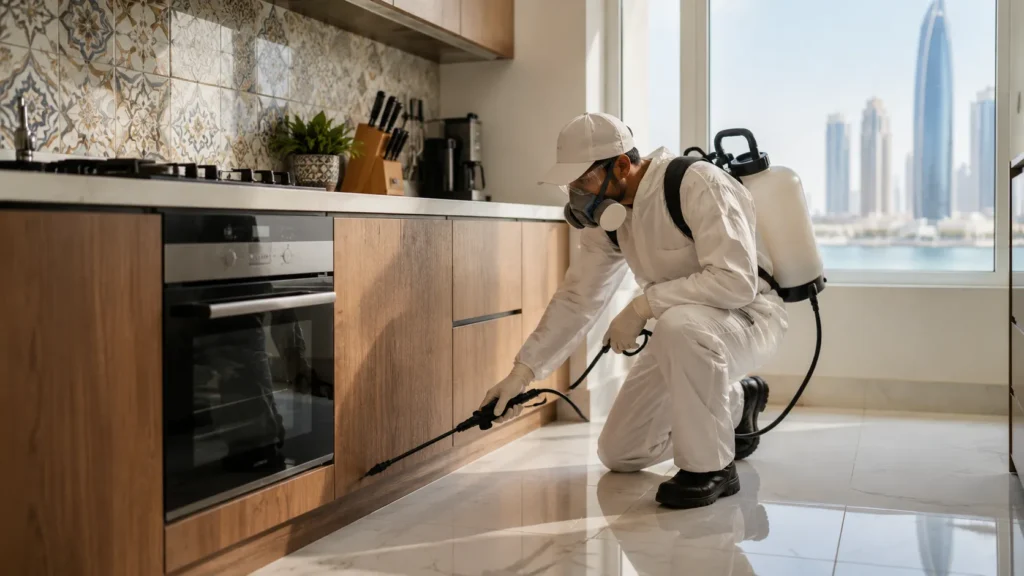
Summer in Abu Dhabi (May to September): The Big Three Strike Hard
Summer is peak season. Full stop. If there is one time of year to take pest prevention seriously in Abu Dhabi, it’s the stretch from late May through September when temperatures routinely hit 45°C and humidity along the coast makes it feel worse.
Why Does Summer Bring So Many More Pests?
It comes down to biology. Insects are cold-blooded. Their metabolism — including their reproduction rate — scales directly with temperature. At 40°C, a cockroach’s breeding cycle accelerates significantly. A single female German cockroach can produce up to 400 offspring in her lifetime, and in UAE summer conditions, that lifecycle compresses. What would take months in a temperate country can happen in weeks here.
At the same time, the heat forces both insects and rodents to seek out cooler, water-accessible environments. Your kitchen. Your bathroom. The dark gaps beneath your sink unit. The cool, damp corners of your utility room.
Cockroaches — The Most Reported Summer Pest in Abu Dhabi
If you ask any pest control technician in Abu Dhabi what the busiest summer pest call is, they’ll say cockroaches without hesitation.
There are two species you’re most likely dealing with:
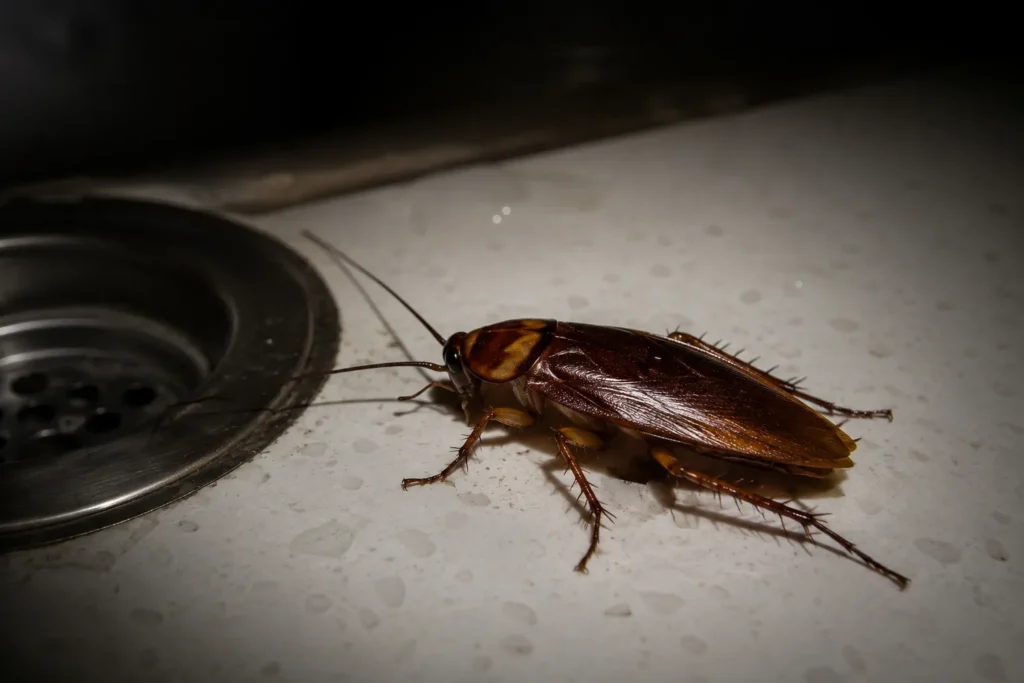
American Cockroach (Periplaneta americana) — the large reddish-brown ones, commonly called “sewer cockroaches.” They come up through drainage systems, particularly in ground-floor units and villas. These are the ones that fly when disturbed — which, yes, is as alarming as it sounds.
German Cockroach (Blattella germanica) — smaller, faster, tan-coloured with two dark stripes behind the head. These live and breed inside your appliances — behind the fridge motor, inside the dishwasher, under the washing machine. They don’t need sewers. They survive entirely on the warmth and food residue inside your home.
Both become significantly more active in summer. German cockroaches especially can go from “a couple sightings” to “full infestation” within a single month when temperatures are high.
Signs of a cockroach problem:
- Droppings that look like small coffee grounds or dark pepper flakes on countertops, in drawers, or inside cabinets
- A faint musty, oily smell — especially in the kitchen
- Egg cases (oothecae) — brown capsule-shaped cases tucked into corners or behind appliances
- Seeing cockroaches in daylight, which usually means the population is large enough that they’re being displaced from hiding spots
If you’re seeing cockroaches regularly, it’s worth reading up on what a professional cockroach control treatment actually involves — because over-the-counter sprays typically make the problem worse by scattering them deeper into the walls.
Ants — The Summer Invaders You Underestimate
Ants in Abu Dhabi are a summer story that doesn’t get told enough. Most people dismiss ant trails as a minor annoyance — until they find a thousand of them swarming the forgotten cereal box at the back of the pantry, or trail through the bathroom caulk up to the medicine cabinet.
The species most commonly causing problems in Abu Dhabi homes are tiny — often called sugar ants or ghost ants. They’re after moisture and carbohydrates. In summer, the outdoor heat drives entire colonies to forage inside, following invisible pheromone trails that can run for metres through wall cavities and around pipes.
The real frustration with ants is that surface spraying doesn’t work. You kill the foragers you can see, but the colony — which could be 100,000+ workers strong — is safely underground or inside a wall void. Within days, a new trail appears somewhere else.
Professional ant control in Abu Dhabi uses gel baits designed to be carried back to the colony — killing the queen and the nest, not just the visible ants. That’s the only approach that actually solves the problem long-term.
Flies and Mosquitoes — Summer’s Most Irritating Duo
Flies are at their worst in summer, particularly around food waste, outdoor bins, and kitchens where doors are frequently opened. House flies in Abu Dhabi can carry bacteria and contaminate food surfaces — which is why commercial kitchens under HACCP compliance take fly control so seriously.
Mosquitoes are a slightly more complicated story. They’re not just a summer pest — they spike twice a year in Abu Dhabi. The first spike comes in late spring and early summer when standing water from garden irrigation, AC drainage, and construction site water pools creates perfect breeding conditions. The second spike often comes after rain events, even minor ones, in autumn.
For both pests, the flies and mosquitoes control service focuses on eliminating breeding sites as much as adult insects — because without addressing where they’re reproducing, any treatment is temporary.
Summer prevention quick wins:
- Fix any AC condensate drainage leaks — standing water outside AC units is a mosquito nursery
- Keep kitchen waste bins sealed and empty them daily in summer
- Store all food in airtight containers
- Seal gaps around drainage pipes under sinks — cockroaches enter through here at night
- Request a mid-summer inspection if you’re in an older villa or ground-floor apartment
Autumn in Abu Dhabi (October to November): Transition Brings New Threats
October in Abu Dhabi feels like a release. Temperatures drop from the mid-40s toward a far more comfortable 30–35°C. Most residents relax. But here’s what most people miss — pest activity doesn’t stop in autumn. It shifts.
Mosquitoes Get a Second Wind
If there’s any rainfall during the October-November period (which happens — UAE weather has become increasingly unpredictable), expect a mosquito surge within four to seven days. Mosquito eggs can hatch in as little as 24 hours in warm water. A small pool of stagnant water in a garden pot saucer, a blocked drain, or a car cover that’s collected rainwater can produce hundreds of mosquitoes.
The danger here is complacency. Summer is when people are vigilant. Autumn is when the guard drops — but in post-rain conditions, mosquito bites can become just as frequent.
Rodents Start Scouting Indoor Routes
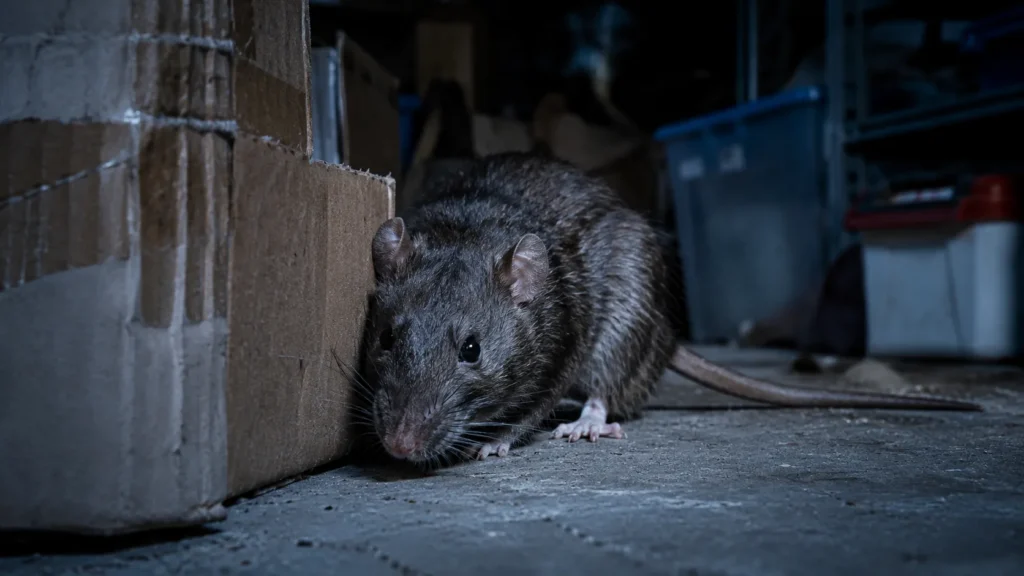
This is the beginning of rodent season. As the outdoor temperature starts to drop, rats and mice instinctively begin looking for warmer, sheltered locations — and human buildings are their most reliable option.
In Abu Dhabi, the most common rodents are the Norway rat (Rattus norvegicus), which lives in burrows and drainage systems and is particularly common around Mussafah’s industrial areas, and the Roof rat (Rattus rattus), which climbs and is found in ceilings, roof spaces, and wall voids of villas and older buildings.
October and November are when rodents are actively scouting entry points — gaps in walls, utility entry holes, damaged drainage covers. Prevention is dramatically easier in autumn than treatment in winter once a colony is established indoors.
For a detailed breakdown of what rodent control involves, the rodent control page covers the baiting, trapping, and proofing approaches used in Abu Dhabi properties.
Winter in Abu Dhabi (December to February): The Cooler Season Doesn’t Mean Pest-Free
A lot of people think winter = fewer pests. And in many ways, outdoor insect activity does reduce — you won’t see as many flies in January. But inside buildings? The story is different.
Rodents Are at Peak Indoor Activity
By December, any rats or mice that found entry points into a building in autumn are now fully established. They’re warm, they have food access, and they’ve started breeding. A single pair of Norway rats can theoretically produce hundreds of offspring within a year under ideal conditions.
Indoor signs of a rodent infestation in winter:
- Scratching sounds in ceilings or walls, particularly at night
- Droppings — dark, spindle-shaped pellets around food storage, countertops, or floor edges
- Gnawed food packaging, cables, or structural materials (rats’ teeth never stop growing — they chew constantly)
- A distinctive musty, ammonia-like smell in enclosed spaces
- Grease marks along skirting boards where rats run the same routes repeatedly
Rodent infestations are one pest problem you genuinely should not attempt to handle entirely alone. Rats carry leptospirosis, salmonella, and other pathogens. They chew electrical cables — which is a direct fire risk. And without proper exclusion work (sealing entry points), any treatment is only temporary.
Cockroaches Retreat — But Don’t Disappear
In winter, German cockroaches retreat further into the warmth of appliances and wall voids. You might see them less — but they’re still there, still breeding, just more concentrated. American cockroaches in drainage systems are largely unaffected by outdoor temperatures since sewers maintain a fairly constant environment year-round.
The risk in winter is that a small, hidden German cockroach infestation gets overlooked — and by the time temperatures rise again in March-April, the population has grown significantly. Winter is actually an excellent time to get a professional inspection, precisely because the pests are concentrated and easier to locate and treat than when they’re spread across a larger foraging area.
Termites Are Inactive — But Planning Their Spring Attack
Termites don’t swarm in winter, but the colonies underground are very much alive and feeding. They’re slower in cooler temperatures, but subterranean termites continue to cause structural damage to wood, insulation, and even buried utility cables year-round.
Winter is one of the best times to schedule a termite inspection and preventive treatment. If you’ve ever been in an Abu Dhabi villa that had a termite problem, you know how extensive the damage can be — door frames hollowed from the inside, wooden flooring with suspiciously soft spots, skirting boards that crumble when touched. The termite control guide for Abu Dhabi explains both the treatment options and the long-term prevention strategies that actually work.
Spring in Abu Dhabi (March to May): The Busiest Pest Season You Weren’t Ready For
Spring is, honestly, the most underestimated pest season in Abu Dhabi. People are focused on enjoying the weather. Balcony furniture is coming out. Windows are open. And then — pests everywhere.
Termite Swarmers — The Most Alarming Sight in March
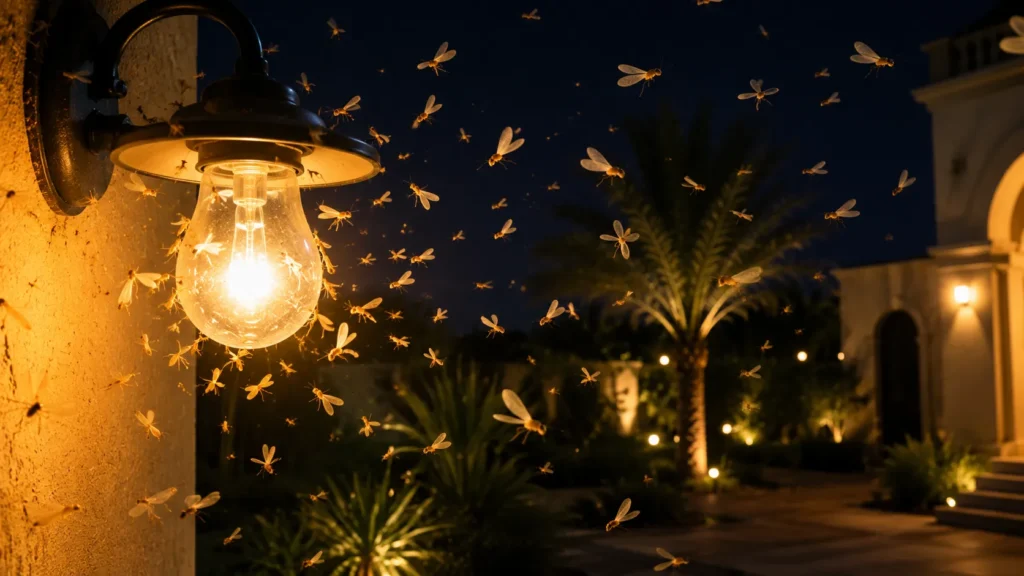
Every spring in the UAE, usually from late February through April, termite colonies produce alates — winged reproductive termites. These swarmers fly out of their colony to mate and establish new colonies. They’re attracted to light, which means they cluster around windows, balconies, and lit outdoor areas in the evenings.
Most people mistake them for flying ants. The easiest way to tell the difference: termite swarmers have equal-length wings and a straight waist, while flying ants have unequal wings and a pinched waist.
Seeing termite swarmers inside or around your home doesn’t automatically mean your structure is infested — but it does mean there’s an active colony nearby, and you should get an inspection done immediately. The colony producing those swarmers is established and feeding somewhere.
This is one of the most time-sensitive pest situations in Abu Dhabi. Don’t wait. If you see a termite swarm on or near your property, the termites control service can carry out a same-day inspection.
Bees and Wasps Make Their Presence Known
Spring is the season for bee swarms and wasp nest establishment in Abu Dhabi. As temperatures warm up and plants flower, bee colonies reproduce and swarm — sending out a new queen with thousands of workers to find a new home. That new home is sometimes inside your AC unit, wall cavity, or outdoor plant box.
Wasp nests in spring are small and just getting started — which means they’re far easier to deal with than the large, aggressive nests of summer. A wasp nest discovered in March with 20-30 workers is a very different problem from a nest in August with 300.
Both bees and wasps need professional handling. Unlike cockroaches or ants, disturbing a nest without the right equipment and approach can trigger a mass defensive response — and in the UAE, this has caused serious injuries. The bees and wasps control service handles both nest removal and relocation using municipality-approved eco-friendly methods. You can also read the detailed bee control guide on the blog for a full breakdown.
Bed Bugs — Spring’s Silent Traveller
Bed bugs have no true season — they’re active year-round. But there’s a reason spring sees a spike. It’s travel season. UAE residents returning from Eid Al Fitr holidays, visitors arriving from abroad, and the general increase in hotel and apartment turnover all create conditions where bed bugs hitch rides in luggage, clothing, and used furniture.
One single fertilised female bed bug introduced to a home can establish a colony in 4-6 weeks. By the time you notice the tell-tale bite patterns — typically three bites in a line (called “breakfast, lunch, and dinner” in pest control) — there’s likely already a multi-generational population in your mattress seams, headboard joints, and skirting boards.
The bed bug control service in Abu Dhabi uses thermal and chemical treatment combinations specifically because bed bugs have developed resistance to many over-the-counter insecticides. It’s also worth reading the bed bug identification guide which covers every sign to look for — from blood spots on sheets to shed skins behind headboards.
Spring prevention priorities:
- Inspect any second-hand furniture before bringing it inside
- Inspect mattress seams and headboard after returning from any hotel stay
- Seal termite-accessible entry points before the swarming season peaks
- Book wasp nest removal early — don’t let a small spring nest become a summer crisis
- Check outdoor drainage and garden irrigation for standing water before mosquito season begins
Year-Round Pests in Abu Dhabi: The Ones That Never Really Leave
Some pests in Abu Dhabi don’t follow a seasonal pattern — they’re just always there, always potentially problematic.
Spiders and Lizards
Geckos and small lizards are incredibly common in Abu Dhabi, particularly in older villas and buildings near green areas. Most are harmless and even eat insects — but nobody wants them running across the living room wall at dinner time. Spiders, similarly, are year-round residents. Most species in Abu Dhabi are harmless, but a few — including false widow spiders occasionally found in garages and storage areas — can give a painful bite.
If spiders or lizards are becoming a persistent issue inside your home, the spider and lizard control service handles both the pest and the environmental factors that attract them.
Birds — A Problem That Escalates Slowly
Pigeons are a year-round issue in Abu Dhabi, particularly on high-rise balconies, AC ledges, and rooftop mechanical areas. A pair of pigeons that settles on your balcony in January can become a nesting colony by June if nothing is done. Their droppings are not just a hygiene problem — they’re acidic and damage paint, metal, and surfaces over time. They also carry mites, which can infest the interior of buildings.
Bird deterrent systems — netting, spikes, wire systems — work best when installed before a colony establishes, not after. The birds control service covers all the municipality-approved humane deterrent options.
Month-by-Month Pest Activity Quick Reference
| Month | Peak Pest Risk |
|---|---|
| January | Rodents (indoor), Cockroaches (hidden) |
| February | Rodents, Early Termite Swarmers |
| March | Termite Swarms, Bees, Wasps, Bed Bugs (travel season) |
| April | Bees, Wasps, Ants Emerging, Cockroaches Increasing |
| May | Cockroaches, Ants, Early Mosquitoes |
| June | Cockroaches, Ants, Flies, Mosquitoes |
| July | All Insects Peak, Cockroaches Severe |
| August | Cockroaches, Flies, Mosquitoes, Bed Bugs |
| September | Cockroaches, Flies, Mosquitoes Declining |
| October | Mosquito Surge (post-rain), Rodents Scouting |
| November | Rodents Entering Buildings, Cockroaches Retreating |
| December | Rodents Indoor, Cockroaches Hidden, Termites Underground |
When Should You Actually Call a Pest Control Company in Abu Dhabi?
This is the question most people ask too late. The honest answer: you should call when you notice any pest activity at all — not when it’s become a full infestation. Every pest problem is dramatically easier and cheaper to treat when it’s small.
That said, here are the situations that absolutely require immediate professional attention, no DIY alternatives:
Call immediately if you see:
- Termite swarmers inside your home (same-day inspection needed)
- A live or moving bee or wasp nest (never disturb it — serious injury risk)
- More than one or two rodents — a single sighting is almost never a single rodent
- Cockroaches during daylight hours — this indicates a large, pressured population
- Blood spots or shed skins indicating bed bugs (the population is already established by the time you see this)
Preventive treatments worth booking:
- Annual termite inspection and treatment, especially in villas
- Seasonal cockroach treatment before summer begins (March-April)
- Rodent exclusion survey before winter begins (October)
- Pest control contracts for commercial kitchens, restaurants, and offices — monthly treatments are not a luxury in Abu Dhabi’s climate, they’re a compliance requirement
For residential properties, a regular annual contract through a municipality-approved company means you’re covered across all seasonal peaks without needing to think about when to book. You can get started with a free consultation here.
What Makes a Pest Control Company in Abu Dhabi Actually Trustworthy?
Not all pest control companies operating in Abu Dhabi are equal. There are some things worth checking before you let anyone treat your home.
Municipality approval is non-negotiable. Abu Dhabi Municipality (TAMM/MoPAD) requires pest control operators to be registered and licensed. An unlicensed company may be using unregulated, potentially harmful chemicals — especially concerning if you have children, pets, or food storage in the space being treated.
Eco-friendly, approved chemicals matter. The chemicals used should be registered with UAE authorities and safe for residential use after the appropriate re-entry period (typically 2-4 hours for most treatments). A reputable company will tell you exactly what they’re applying and why.
Guarantee and follow-up. Any professional treatment should come with a warranty period. If cockroaches return within 30 days of a full gel and spray treatment, the company should return at no extra charge. This is standard practice among serious operators.
Elite Defence Pest Control is municipality-approved, uses only eco-friendly government-approved products, and covers all areas across Abu Dhabi — from Mussafah and Khalifa City to MBZ, Shabiya, and beyond. The team is also available for same-day service for urgent infestations.
Seasonal Pest Prevention Checklist
You don’t need to memorize everything above. Stick this list on your fridge and use it as a twice-yearly review:
Before Summer Begins (April)
- Seal all gaps around drainage pipes under kitchen and bathroom sinks
- Check AC unit condensate drainage — no standing water anywhere near the unit
- Clean behind and under the fridge thoroughly — remove any cockroach signs
- Book pre-summer cockroach and ant treatment if you had issues last year
- Inspect pantry and food storage areas — move all food into airtight containers
Before Winter Begins (October)
- Inspect all exterior walls and utility entry points for gaps — seal with appropriate material
- Check roof space and ceiling access points if you’re in a villa
- Clear garage and storage areas of clutter (rodents’ favourite harborage)
- Book a rodent exclusion survey if you’ve had issues before
- Remove any post-rain standing water immediately
Pre-Spring (February)
- Book a termite inspection before swarming season
- Check outdoor structures, wooden furniture, fence posts, and garden beds for termite damage
- Inspect under-sink and balcony areas for early bee/wasp nest signs
- If returning from travel, inspect luggage and hotel room mattress before packing
FAQ: Seasonal Pest Questions Abu Dhabi Residents Actually Ask
Which month has the worst cockroaches in Abu Dhabi?
July and August are peak months for cockroach activity in Abu Dhabi. The combination of extreme heat, high humidity (particularly in coastal areas), and maximum breeding rate means these two months see the highest call volumes for cockroach treatment. That said, a German cockroach infestation inside appliances can be just as severe in any month of the year — they’re insulated from outdoor conditions.
Do pests go away on their own in Abu Dhabi winter?
No. This is one of the most persistent misconceptions about pest control in the UAE. Unlike in Europe or North America, where winter temperatures kill off most insect populations, Abu Dhabi’s winter is simply mild — not cold enough to reduce pest populations meaningfully. Cockroaches move deeper into heated wall voids. Rodents establish themselves indoors. Termite colonies continue feeding. Winter is the time to treat existing problems and prevent new ones from establishing — not to relax pest vigilance.
How do I know if I have termites or flying ants?
Look at the wings: termite swarmers have two pairs of wings of equal length, while flying ants have unequal wing sizes. Termite swarmers also have a straight (non-pinched) waist compared to the distinctive narrow waist of ants. If you’re seeing swarmers in or around your home in March-April, get an inspection — regardless of which species they turn out to be.
Can I do my own pest control in Abu Dhabi?
For very minor issues — a handful of ants near a food source, a single gecko in the bathroom — common-sense prevention measures (sealing food, fixing leaks, clearing clutter) can be effective. But for cockroaches, bed bugs, rodents, termites, bees, and wasps, DIY approaches in Abu Dhabi almost always fail or make the problem worse. The pest species here are aggressive, fast-breeding, and often resistant to standard retail pesticides. Professional-grade baits, chemicals, and techniques — combined with expertise about UAE-specific pest behaviour — produce outcomes that retail products simply can’t replicate.
Are pest control treatments safe for children and pets?
With a reputable municipality-approved company: yes. Modern professional pest control in Abu Dhabi uses eco-friendly, government-approved formulations. You’ll typically be asked to vacate the space during treatment and for 1-3 hours afterward, depending on the treatment type. After that re-entry period, the treated areas are safe. Elite Defence uses only products approved by UAE authorities, specifically with child and pet safety in mind. If you have specific concerns — a newborn in the home, pets with respiratory conditions — always mention this when booking so the team can tailor their approach.
What’s the most common pest call in Abu Dhabi summer?
Cockroaches. By a significant margin. Followed by ants and mosquitoes. In summer, the team at Elite Defence handles cockroach treatments across villas and apartments in Mussafah, Khalifa City, and MBZ on a daily basis — mostly German cockroach infestations in kitchens and bathrooms.
How often should I get pest control done for my home?
For a standard apartment with no current infestation: once or twice a year as a preventive measure, timed before summer and before winter. For villas, particularly those with gardens and older construction: quarterly treatments are the standard recommendation given Abu Dhabi’s pest pressure. Commercial properties — restaurants, hotel kitchens, food processing facilities — require monthly treatments under HACCP and Abu Dhabi Municipality guidelines.
Final Thought: The Calendar Doesn’t Manage Pests — Preparation Does
There’s a pattern to how people deal with pest problems in Abu Dhabi. Something shows up — a cockroach in the kitchen, a rat heard in the ceiling, a strange bite mark — and they react. They buy a spray. It doesn’t fully work. A month later, the problem is bigger.
The seasonal guide above exists to help you break that cycle. When you know termites swarm in March, you schedule an inspection in February. When you know rodents start scouting in October, you seal your entry points in September. When summer cockroach season arrives in May, you’re already treated — not scrambling.
It’s genuinely not much effort, spread across the year. And the alternative — dealing with a full infestation of any of the pests above — is far more stressful, more disruptive, and takes longer to resolve.
If you’re not sure where to start, a free inspection from a qualified team is the easiest first step. Elite Defence Pest Control serves all areas of Abu Dhabi with municipality-approved treatments, eco-friendly chemicals, and same-day availability for urgent cases. Get in touch here — or give them a call at +971 55 906 9032.