Living in Abu Dhabi means dealing with heat, humidity, and — like it or not — insects. From cockroaches sneaking into kitchens to bed bugs hiding in mattresses, insect problems can spread fast across Abu Dhabi’s neighborhoods — from Khalifa City and Al Reem Island to Mussafah and the city center — if left untreated. At Elite Defence Pest Control, we help Abu Dhabi homeowners and businesses get ahead of infestations with safe, effective, and long-lasting insect pest control solutions.
If you’ve noticed droppings in your cupboards, bites on your skin, or strange trails along your walls, this guide will walk you through what’s causing it, why it happens so often in Abu Dhabi’s climate, and how our team fixes it for good.
Why Insect Infestations Are So Common in Abu Dhabi
Abu Dhabi’s warm climate, coastal humidity, and dense residential communities create ideal breeding conditions for insects almost all year round. Unlike colder countries where pests slow down in winter, insects here stay active year-round, which means infestations can grow quickly if not managed early — whether you’re in a villa in Khalifa City, an apartment on Al Reem Island or the Corniche, or a warehouse in Mussafah.
Common Insects Found in Abu Dhabi Homes and Offices
The most frequent culprits our teams encounter include:
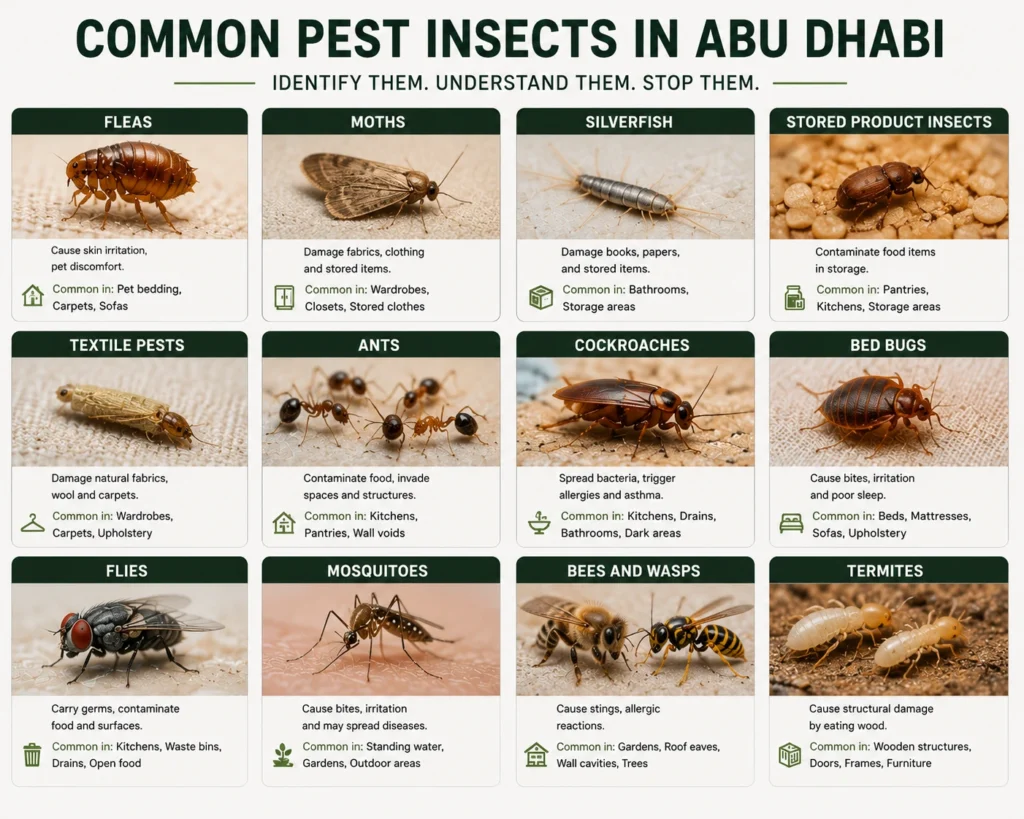
- German and American cockroaches — German roaches are smaller and breed fastest, favoring kitchens and behind appliances; American roaches are larger and often come up through drains and basements. Spread bacteria and trigger allergies and asthma.
- Bed bugs — spread through furniture, luggage, and shared walls, and can travel between units in the same building. Cause bites, irritation, and poor sleep.
- Pharaoh ants and carpenter ants — pharaoh ants are tiny and nest inside wall voids, splitting into multiple colonies when disturbed, which is why store-bought sprays often make an ant problem worse, not better. Contaminate food and invade pantries and wall voids.
- Mosquitoes — breed in standing water, gardens, and outdoor areas; cause bites, irritation, and may spread disease.
- Flies — carry germs and contaminate food and surfaces, common around kitchens, waste bins, and drains.
- Fleas — cause skin irritation and pet discomfort, usually found in pet bedding, carpets, and sofas.
- Silverfish — damage books, papers, and stored items, typically in bathrooms and storage areas.
- Moths — damage fabrics, clothing, and stored items, commonly found in wardrobes, closets, and stored clothes.
- Textile pests — damage natural fabrics, wool, and carpets, often in wardrobes and upholstery.
- Stored product insects — contaminate food items in storage, typically in pantries and kitchens.
- Bees and wasps — cause stings and allergic reactions, usually nesting in gardens, roof eaves, and wall cavities.
- Termites — cause structural damage by eating wood, found in wooden structures, doors, frames, and furniture.
Health Risks of Ignoring an Infestation
Beyond the discomfort, insects carry real health risks. Cockroach droppings and shed skin can trigger asthma and allergies, especially in children. Bed bug bites cause skin reactions and, for some people, disrupted sleep from repeated exposure. Flies transfer bacteria between waste and food surfaces just by landing on both. Fleas cause ongoing skin irritation for both people and pets, while bee and wasp stings can trigger serious allergic reactions in sensitive individuals. This is part of why we treat the problem as a health matter, not just a cleanliness one.
Climate Factors That Attract Pests
High humidity, air-conditioned indoor environments, and closely built apartment blocks all make it easier for pests to move between units undetected. This is why professional, building-wide treatment is often more effective than a single household spraying alone.
Activity also shifts with the seasons. Summer heat pushes cockroaches and ants indoors chasing cool, damp spots — usually kitchens and bathrooms. Cooler winter months slow outdoor breeding but don’t stop it entirely, since air conditioning keeps indoor conditions warm and stable year-round. Bed bugs, unlike most insects, aren’t seasonal at all — they spread through movement of people and furniture, so they show up just as often in January as in July.
Signs You Need Professional Insect Pest Control
Many residents try DIY sprays first, but certain warning signs mean it’s time to call a licensed provider:
- Visible insects during the day (not just at night)
- Unexplained bite marks appearing overnight
- A musty or oily odor near skirting boards
- Small dark droppings near food storage or furniture
- Shed skins or egg casings in corners and cracks
If any of these sound familiar, our pest inspection team can identify the exact species and entry points before treatment begins.
Our Insect Pest Control Process
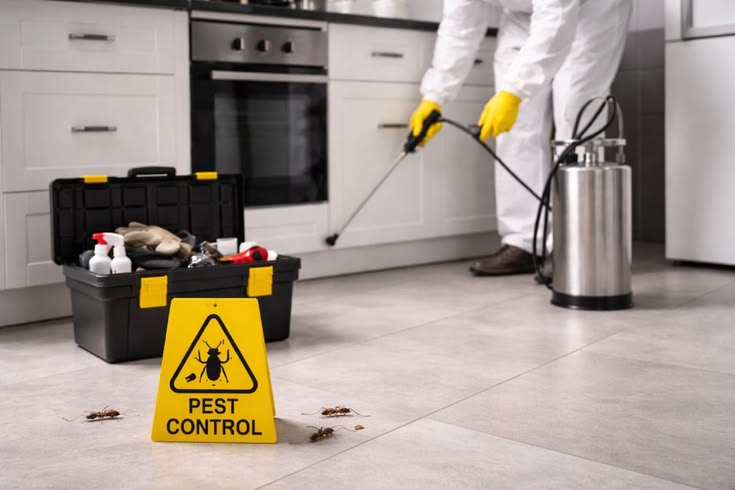
At Elite Defence Pest Control, we follow a structured, three-stage approach designed for lasting results, not just a quick spray.
1. Inspection and Identification
A technician inspects the property to confirm the insect type, the extent of the infestation, and likely entry points — this determines which treatment method will actually work.
2. Targeted Treatment
We use a combination of gel baiting, residual spraying, and dust treatments, chosen based on the insect and the environment, including pet- and child-safe options for homes and nurseries.
3. Prevention and Follow-Up
Sealing entry points and scheduling a follow-up visit ensures the problem doesn’t return. This step is often skipped by DIY methods, which is why insects reappear within weeks.
Types of Insect Pest Control We Offer
Cockroach Control
Deep treatment for kitchens, drains, and storage areas using low-odor, long-lasting formulas.
Bed Bug Treatment
Full-room heat and chemical treatment for mattresses, furniture, and cracks where bed bugs hide.
Ant Control
Bait-based treatment that eliminates the colony at the source, not just visible ants.
General Insect and Fly Control
Ongoing protection plans for restaurants, offices, and residential buildings — see our full pest control services for flies and mosquitoes.
Flea Treatment
Targeted treatment for carpets, pet bedding, and upholstery where fleas breed and hide. Part of our other pests services.
Moth and Textile Pest Control
Protects wardrobes, closets, and stored fabrics from damage caused by moths and textile-feeding insects — also covered under other pests.
Bees and Wasps Removal
Safe removal of nests from roof eaves, wall cavities, and gardens without putting residents at risk of stings.
Stored Product Insect Control
Protects pantries and kitchen storage from insects that contaminate packaged and dry food items, part of our other pests range.
For infestations involving wood-damaging insects, our dedicated termite control service uses a separate, specialized treatment approach.
DIY Sprays vs. Professional Pest Control
Store-bought sprays can kill insects on contact, but they rarely reach nests, egg clusters, or wall cavities where colonies actually live. Professional treatment targets the source, which is why licensed pest control typically lasts months longer than DIY alternatives — and comes with a service guarantee.
Questions Our Customers Actually Ask Us
“How often do I really need this done?” Honestly, it depends on your building. A high-rise apartment on Al Reem Island or the Corniche with good waste management might be fine every 6 months. A ground-floor villa in Khalifa City or Al Raha near green spaces, or a restaurant kitchen downtown, usually needs a visit every 3 months — we’ve seen infestations come back faster in those spots simply because there’s more exposure to begin with.
“Is it safe to have this done with kids or pets at home?” Yes, and this comes up in almost every booking. We use low-toxicity, approved formulas, and we’ll tell you exactly how long to keep a room closed before your kids or pets go back in — usually not long. If you have a specific concern (a crawling baby, a fish tank, an elderly parent), just mention it when you book and we’ll adjust the treatment.
“I had this done before and they came back — why?” This is the most common complaint we hear about other providers, and it usually comes down to one thing: the entry points were never sealed. Spraying kills what’s visible, but if a crack under the sink or a gap around a pipe is still open, new insects just walk right back in. That’s why we treat sealing as part of the job, not an upsell.
“What’s actually the difference between ‘insect control’ and ‘pest control’?” People use the terms loosely, but insect control specifically means crawling and flying pests — cockroaches, ants, bed bugs, flies. If you’re also dealing with rats or mice, that’s a separate approach with different bait and safety considerations — our rodent control page covers that side of things.
What Affects the Cost of Treatment
Pricing isn’t one-size-fits-all, and a few factors usually decide the final quote:
- Property size and layout — a studio apartment costs less to treat than a villa with a garden or a multi-floor office.
- Severity of the infestation — an early-stage ant trail is quicker to resolve than a bed bug problem that’s spread across multiple rooms.
- Type of insect — bed bug treatment generally takes longer than a cockroach or ant visit because it often needs a follow-up to catch any eggs that hatch after the first round.
- Frequency — a one-time visit costs more per session than a scheduled quarterly plan, which is why most restaurants and villas opt for a maintenance contract instead.
We provide a clear quote after inspection, before any treatment begins — no guessing games.
Preparing for Your Appointment
A little preparation helps the treatment work better and faster:
- Clear countertops and cupboards in the kitchen so the technician can reach corners and behind appliances.
- Wash and bag bedding separately if bed bugs are suspected, rather than moving it to another room.
- Keep children and pets out of the treated area for the time your technician specifies — usually a few hours, not days.
- Avoid mopping or wiping treated surfaces for at least 24–48 hours so the treatment has time to work.
Why Choose Elite Defence Pest Control
- Licensed technicians serving homes and businesses across Abu Dhabi, from Khalifa City and Al Reem Island to Mussafah and Al Ain Road — read more about our team
- Treatments tailored to each insect type, not one-size-fits-all spraying
- Safe formulas suitable for families, pets, and food-handling environments
- Follow-up visits included to confirm the problem is fully resolved
Don’t wait for a small problem to become an infestation. Book your insect pest control inspection with Elite Defence Pest Control, Abu Dhabi’s trusted local team, and get a tailored treatment plan for your property. You can also get in touch with us directly with any questions before booking.