A single rodent burrow under a pallet rack or one cockroach colony near a loading dock can shut down a warehouse audit, void an insurance claim, or get stock rejected by a client. Pest control treatment for warehouse facilities is fundamentally different from a home or small-office job — it has to work around 24-hour operations, food-grade or pharma-grade storage rules, and structures the size of a football field, without ever letting chemicals near stored goods.
I’ve spent nine years treating warehouses across Mussafah, Khalifa Industrial Zone (KIZAD), and ICAD, and the pattern is almost always the same: the infestation didn’t start with poor housekeeping, it started with a gap in the treatment plan — a door left open on a hot night, a drainage line that was never sealed, a bait station that was checked once and forgotten. Below is the treatment framework we use on commercial sites, the pests that actually cause the damage, and what Abu Dhabi’s municipality expects you to have on file.
Why Warehouses Are High-Risk Pest Environments
Warehouses combine four conditions pests thrive on: large, undisturbed storage zones; consistent temperature; food, packaging, or organic material moving through on a schedule; and dock doors that open dozens of times a day. In Abu Dhabi specifically, the summer heat pushes rodents, cockroaches, and ants indoors toward air-conditioned, humidity-controlled space — which is exactly what a warehouse offers.
The pests most commonly reported in UAE industrial and logistics sites are:
- Rodents (roof rats and house mice) — gnaw through cabling, packaging, and insulation, and contaminate stock with droppings and urine
- Cockroaches (American and German) — spread rapidly through cardboard and pallet stacks, common near break rooms and drainage
- Stored-product pests (weevils, beetles, moths) — infest grain, flour, textiles, and packaged food inventory directly, see other pests we treat
- Termites — a structural risk in older warehouse buildings with wooden racking, doorframes, or roof supports
- Flies — breed near waste bins, loading docks, and standing water
Rodent contamination in particular is a documented public-health and food-safety concern; the U.S. Centers for Disease Control and Prevention notes that rodents can spread disease through droppings, urine, and bites, and can contaminate food and food-preparation surfaces even where an infestation isn’t visibly obvious (CDC – Rodents).
The Warehouse Treatment Process, Step by Step
A proper commercial treatment isn’t a single spray visit. It follows a cycle:
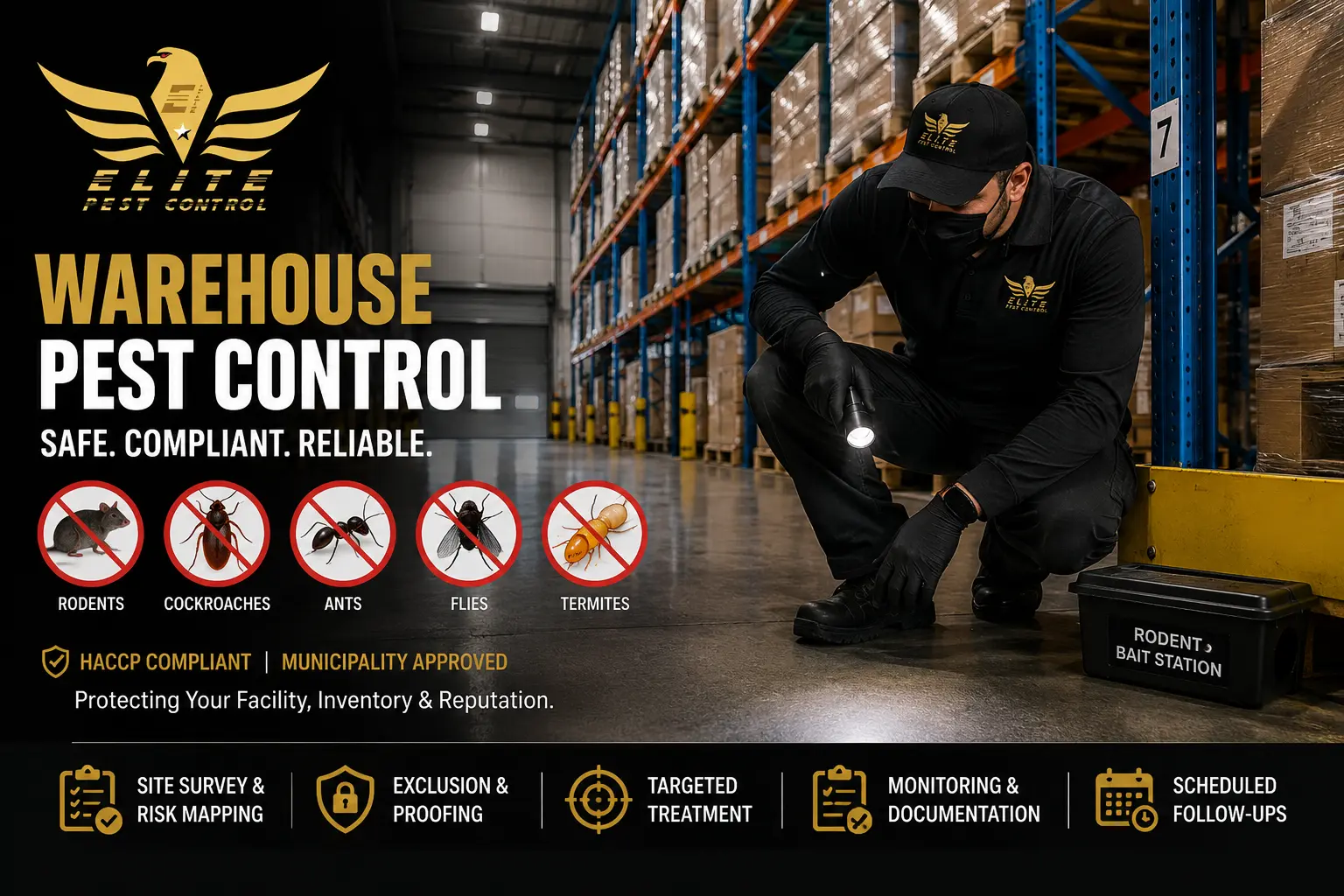
1. Site Survey and Risk Mapping
We walk the full facility — receiving dock, racking aisles, break areas, waste zones, and the building perimeter — to identify entry points, harborage areas, and current activity (droppings, gnaw marks, egg cases, live sightings). This determines which pests are active and where bait or monitoring stations need to go.
2. Exclusion and Proofing
Before any chemical treatment, we seal gaps around dock doors, pipe penetrations, and roof lines. Rodents can enter through a gap the width of a pencil, so exclusion work is often what actually stops a reinfestation — treatment without sealing entry points is a temporary fix.
3. Targeted Treatment
- Rodents: tamper-resistant bait stations placed along walls and runways, with trapping in high-risk zones instead of open bait where stock is food-grade
- Cockroaches: gel baiting and crack-and-crevice treatment focused on drains, motor housings, and pallet stacks — not broadcast spraying across open floor space
- Stored-product pests: pheromone monitoring traps combined with source removal, since these pests usually arrive already inside incoming stock
- Termites: localized liquid or bait-system treatment around structural timber and slab edges
4. Documentation and Monitoring
Every commercial visit should leave you with a signed service report, station locations, and activity logs — this is what an auditor or municipality inspector will ask to see, and it’s what separates a real IPM (Integrated Pest Management) program from a one-off spray.
5. Scheduled Follow-Up
Warehouses need recurring visits, not annual ones. Monthly or bi-monthly checks catch new activity before it becomes a full infestation, particularly around seasonal shifts when rodents move indoors.
Compliance: What Abu Dhabi Warehouses Are Required to Have
Commercial and industrial sites — including warehouses, cold stores, and distribution centers — are expected to use municipality-approved pest control providers and keep documented treatment records available for inspection. Facilities handling food, packaging, or FMCG stock are typically held to HACCP-aligned pest management standards, meaning bait station mapping, treatment logs, and safety data sheets need to be on file and current, not produced only when an inspector shows up.
If your warehouse handles food, cosmetics, or pharmaceuticals, ask your provider directly whether their service includes HACCP-compliant documentation — this is one of the first things a client or regulatory audit will request.
How Often Should a Warehouse Be Treated?
Most active warehouses in Abu Dhabi need service every 30–60 days, with more frequent checks during summer months when rodent and cockroach pressure from outside the building increases. Cold storage and food-handling warehouses often need monthly visits to stay within HACCP audit requirements, while dry-goods or general storage facilities can sometimes extend to quarterly service once an exclusion program is in place and monitoring shows low activity.
What This Costs and What Affects the Price
Warehouse treatment pricing depends on floor area, the number of bait/monitoring stations required, pest pressure at the time of survey, and whether the facility needs HACCP documentation. A single-visit call-out for an active infestation costs less upfront than a contract, but recurring problems in warehouses almost always come back cheaper under a scheduled annual contract than repeated emergency visits — because most of the cost in an emergency visit is the urgency, not the treatment itself.
Frequently Asked Questions
Is warehouse pest control safe for stored food or packaged goods? Yes, when done correctly. Commercial treatments use targeted methods — gel baits in cracks and crevices, tamper-resistant rodent stations, and localized spot treatment — rather than broadcast spraying near stock. Food-grade and pharma warehouses require providers to follow HACCP-aligned protocols, which specify where chemicals can and cannot be applied relative to stored inventory, and require documentation showing exactly what was used and where.
What’s the biggest cause of repeat infestations in warehouses? Unsealed entry points, not weak chemical treatment. Rodents and cockroaches keep coming back through the same gaps around dock doors, drainage lines, and pipe penetrations. A treatment plan that skips exclusion work will need repeat call-outs even if the chemical treatment itself is effective, because new pests simply replace the ones removed.
Do warehouses need a pest control contract or are one-off visits enough? A single visit can knock down an active infestation, but warehouses are high-traffic, high-risk environments that get reinfested easily. A scheduled contract with monthly or bi-monthly visits, documented monitoring, and seasonal adjustments is what most municipality and client audits expect to see, and it’s typically more cost-effective than repeated emergency treatments over a year.
Get a Warehouse Inspection Booked
If your facility is due for its next scheduled treatment — or you’ve noticed droppings, gnaw marks, or activity near the loading dock — it’s worth getting ahead of it before stock or an audit is affected. Elite Defence Pest Control handles rodent control and full commercial pest programs for warehouses, cold stores, and distribution centers across Mussafah, KIZAD, and ICAD, with HACCP-compliant documentation included. You can book a free inspection or call +971 55 906 9032 for same-day emergency service.