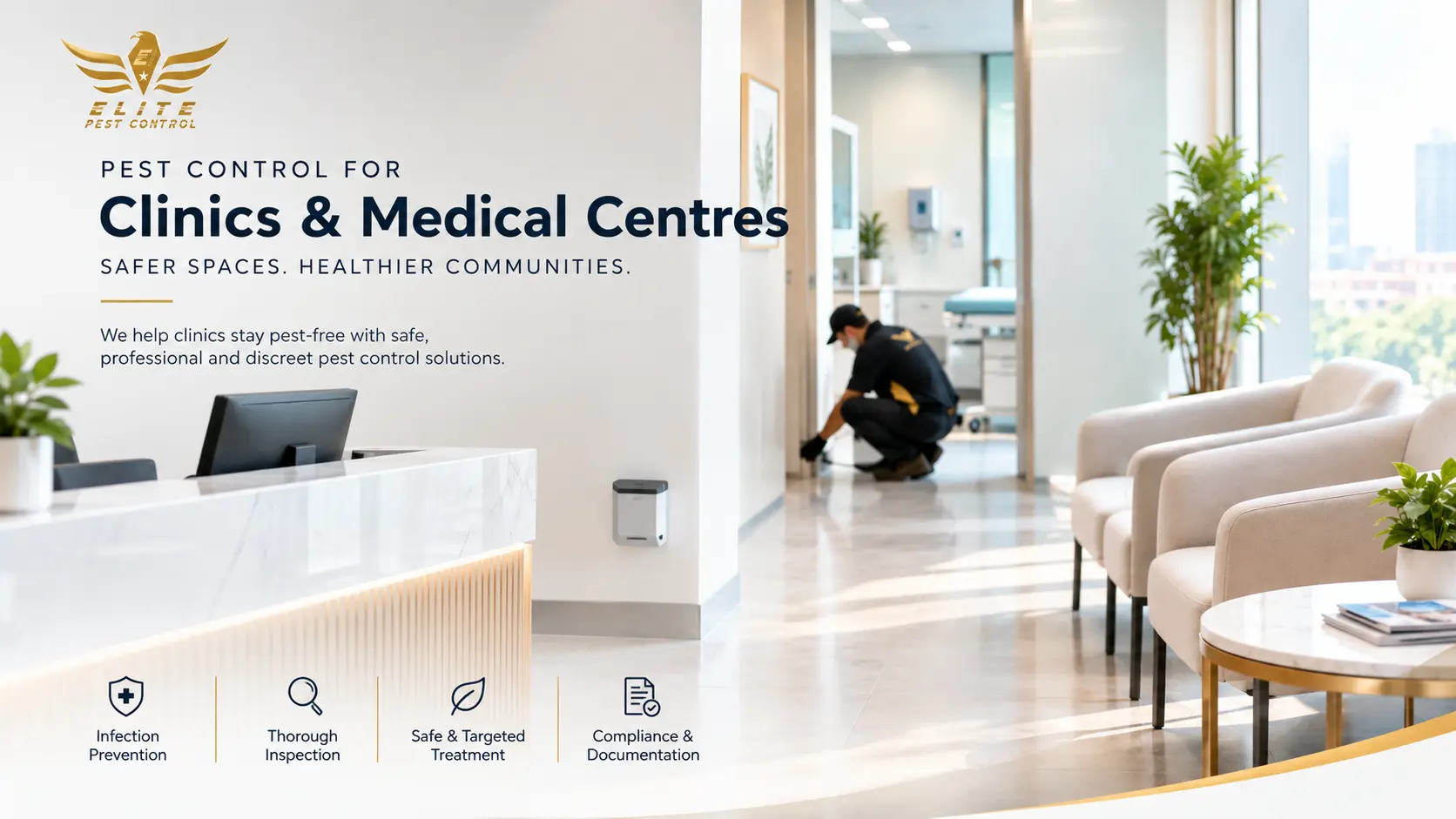
Quick answer: Pest control for clinics and medical centres in Abu Dhabi is about infection control first and pest removal second. A good programme uses a licensed, municipality approved provider, a site-wide inspection, prevention in sensitive zones (sterilisation rooms, clinical waste areas, medicine and supply stores), targeted low-risk treatment, and written records for every visit.
A patient in a waiting room is usually a little nervous already. They are unwell, or worried about someone who is. Then a cockroach crosses the floor near the reception desk.
They will not say anything. They will just quietly decide that this is not the kind of place they trust with their health.
For a clinic, pests are not a housekeeping problem. They sit right next to your clinical standards. This guide looks at pest control through a healthcare lens: how pests actually get into clinics, which areas matter most, what a safe treatment looks like around patients, and how to pick a provider who understands all of that.
Why Pests Are a Bigger Deal in a Clinic
Healthcare settings treat pests as an infection-control topic. Infection Control Today points out that pests can carry organisms linked to illnesses such as staph and salmonella, and hospitals can be prime targets for infestations. PestWorld adds that the CDC lists insects and rodents among the environmental infection-control concerns in healthcare.
In a clinic, that plays out in a few specific ways:
- Sensitive patients. Children, older adults, pregnant women and people with weakened immunity are all walking through your door.
- Sterile and clean zones. A pest in a sterilisation room, procedure room or supply store is a direct hygiene failure.
- Trust. Patients judge your clinical care partly by what they can see. A visible pest undermines everything else.
- Pesticide limits. You cannot treat a clinic like a warehouse. Sprays near patients, medicines and equipment need real care.
That last point is what makes healthcare pest control its own discipline.
How Pests Actually Get Into a Clinic
Most clinic owners assume pests come from dirt. Usually they come from movement. Healthcare buildings have constant traffic: patients, visitors, couriers, lab samples, linen and supply deliveries. Pests hitch a ride, or slip through the gaps those routines create.
Here are the usual entry routes:
- Deliveries and cardboard. Boxes from storage rooms and suppliers can carry cockroaches and their egg cases straight into your supply room.
- Drains and plumbing gaps. Unused sinks and floor drains in procedure rooms or labs give cockroaches and drain flies an easy path indoors.
- Shared buildings. Many Abu Dhabi clinics sit inside malls, towers or mixed-use buildings. If a neighbouring café or unit has a problem, yours becomes next.
- Door gaps and service penetrations. Pipe and cable openings, loading doors and poorly sealed entrances are open invitations for rodents and ants.
- People. Bags, clothing and waiting-room furniture are a common way for bed bugs to arrive. We cover this in our bed bug identification guide, and in what to do if bed bugs come back after treatment.
A Walk Through Your Clinic: Where to Look First
Instead of a pest-by-pest list, think about the patient journey. Here is where problems tend to appear, and why.
Reception and Waiting Area
Upholstered chairs, magazine racks, plants and corners behind vending machines are favourite hiding spots. This is also where patients are most likely to notice something. Check seams and crevices, and keep food and drink from being left around.
Consultation and Procedure Rooms
Look at drains, sink cabinets and gaps behind equipment. Ants and small flies often show up near sinks and wet areas, even in very clean rooms.
Sterilisation and Equipment Rooms
These are your highest-sensitivity spaces. The aim is to keep pests out entirely, which means sealing, moisture control and monitoring rather than routine spraying. Any treatment here should be agreed in advance with your infection control lead.
Clinical Waste and Bin Areas
Waste rooms attract flies, cockroaches and rodents. Keep lids closed, clean up spills straight away and make sure collection schedules do not let waste sit.
Staff Pantry and Break Room
Almost every clinic’s cockroach story begins here. Crumbs, open food, a damp sink and warm appliances give pests everything they need. Once they settle in, they travel through wall voids and pipes to the rest of the building.
Storage and Medicine Rooms
Rodents and cockroaches love cardboard. Raise stock off the floor, keep it away from walls and rotate it so nothing sits untouched for months.
Exterior, Car Park and Rooftop
Birds, rodents, mosquitoes and wasps build up outside before they come in. Standing water, overgrown plants and bird nesting on AC units or ledges are common triggers.
Treatment That Respects Patients: The IPM Approach
Healthcare pest control works best with Integrated Pest Management (IPM). It is built around prevention instead of constant spraying, which matters when your patients are vulnerable. PestWorld describes an effective healthcare IPM programme as one that combines routine inspections, sanitation, exclusion, moisture management, monitoring, documentation and targeted control.
In a clinic setting, that usually looks like this:
- Inspect the whole building. Public areas, back-of-house, drains, storage, waste and the exterior.
- Find the cause. Moisture, food, gaps and clutter are what actually keep pests around.
- Seal and exclude. Closing pipe gaps, door gaps and cable openings is gentle, effective and long-lasting.
- Use targeted treatment only where needed. Gel baits, bait stations and crack-and-crevice work, rather than broad spraying in occupied rooms.
- Time the work around patients. Early mornings, evenings or closed days, with low-odour, government-approved, eco-friendly products.
- Monitor and record. Monitoring points and written service reports show what changed and when.
This is the same safety-first thinking behind our eco-friendly, non-toxic treatments.
What Abu Dhabi Expects From You
Pest control is regulated in Abu Dhabi, and the system has been changing. In 2024, the Abu Dhabi Public Health Centre (ADPHC) took on public health pest control, handling pest monitoring and control requests in homes, public spaces and facilities across the emirate.
Authorities have also warned against using unlicensed operators. Gulf News reported around 1,616 pest control operators in the emirate, with registered operators listed on the Tadweer website.
For a clinic, the practical takeaway is simple: use a licensed provider, ask to see their approvals, and keep service records on file. Rules can change, so confirm your current requirements with the relevant Abu Dhabi authority and your own licensing body.
A Simple Prevention Routine for Your Team
Your provider handles treatment. Your staff handle the daily habits that stop problems starting.
- Keep food and drink in sealed containers and in staff areas only.
- Empty bins daily and keep waste-room lids shut.
- Report leaks, damp patches and dripping taps straight away.
- Unpack deliveries in a designated area and break down cardboard quickly.
- Keep storage shelves off the floor and away from walls.
- Ask cleaners and reception staff to report droppings, egg cases, dead insects and bite marks.
- Keep vegetation and clutter away from building entrances.
- Treat “just one” sighting as a signal. One cockroach rarely means one cockroach.
How to Choose a Pest Control Provider for a Clinic
Healthcare is a sensitive environment, so a standard residential provider may not be the right fit. Before you sign, ask:
- Are you licensed and municipality approved in Abu Dhabi?
- Do you run an IPM programme, or mainly spray?
- Which products do you use around patients, and can I see the safety information?
- Can you work outside clinic hours and coordinate with our infection control lead?
- Do you provide written reports after every visit?
- How fast can you respond to an urgent sighting?
On visit frequency, the right schedule depends on your size and risk. Our pest control frequency guide for Abu Dhabi explains how schedules differ by property type. If your clinic also runs a cafeteria or food outlet, see our guide to pest control for hotels and restaurants in Abu Dhabi for the food-service side.
How Elite Defence Pest Control Helps Clinics and Medical Centres
We are based in Mussafah and serve Abu Dhabi, including Khalifa City, MBZ and Shabiya. For clinics and medical centres, that means:
- Municipality approved service with licensed, trained technicians
- Eco-friendly, government-approved products suitable for sensitive environments
- Same-day response for urgent sightings
- Inspection-led plans built around how your clinic really works
- Annual contracts with regular follow-ups, through our pest control contracts
You can see the full range on our pest control services page, including cockroach control, rodent control and flies and mosquitoes control.
Want a second pair of eyes on your clinic? Book a free inspection, call +971 55 906 9032, or message us on WhatsApp.
Frequently Asked Questions
Why is pest control different for a clinic than for an office?
A clinic has vulnerable patients, sterile zones, medicines and clinical waste. That means treatment needs to be more targeted, lower in odour, scheduled around patients and well documented. Prevention does more of the work than spraying.
Is pest control safe to use around patients and medical equipment?
It can be, when a licensed provider uses government-approved products, treats only where needed, and schedules work outside patient hours. Sensitive areas like sterilisation rooms should be discussed with your infection control lead before any treatment.
What are the most common pests in medical centres?
Cockroaches, rodents, flies, ants and bed bugs are the pests most often reported in healthcare settings. Cockroaches tend to concentrate around pantries, drains and equipment, while bed bugs arrive on people and belongings.
Do dental clinics and small clinics need pest control too?
Yes. Size does not change the risk. Small clinics in shared buildings are often affected by neighbouring units, and they have fewer staff to spot early signs, so a planned programme is especially useful.
Can you provide same-day pest control for a clinic in Abu Dhabi?
Yes. We offer urgent same-day service across Abu Dhabi. Call or WhatsApp +971 55 906 9032.
How do I check that a pest control company is licensed in Abu Dhabi?
Ask for their licence and approvals, and check the official registry of licensed operators. Authorities have warned against using unlicensed firms.
Final Thoughts
A clinic should feel calm, clean and trustworthy from the moment someone walks in. Pests quietly undermine all three. With a licensed provider, an IPM routine and a team that spots problems early, you can keep patients protected without disrupting care.
If you would like help building a plan for your clinic, our team will walk the premises with you and suggest next steps. You can also browse more practical tips on our blog.