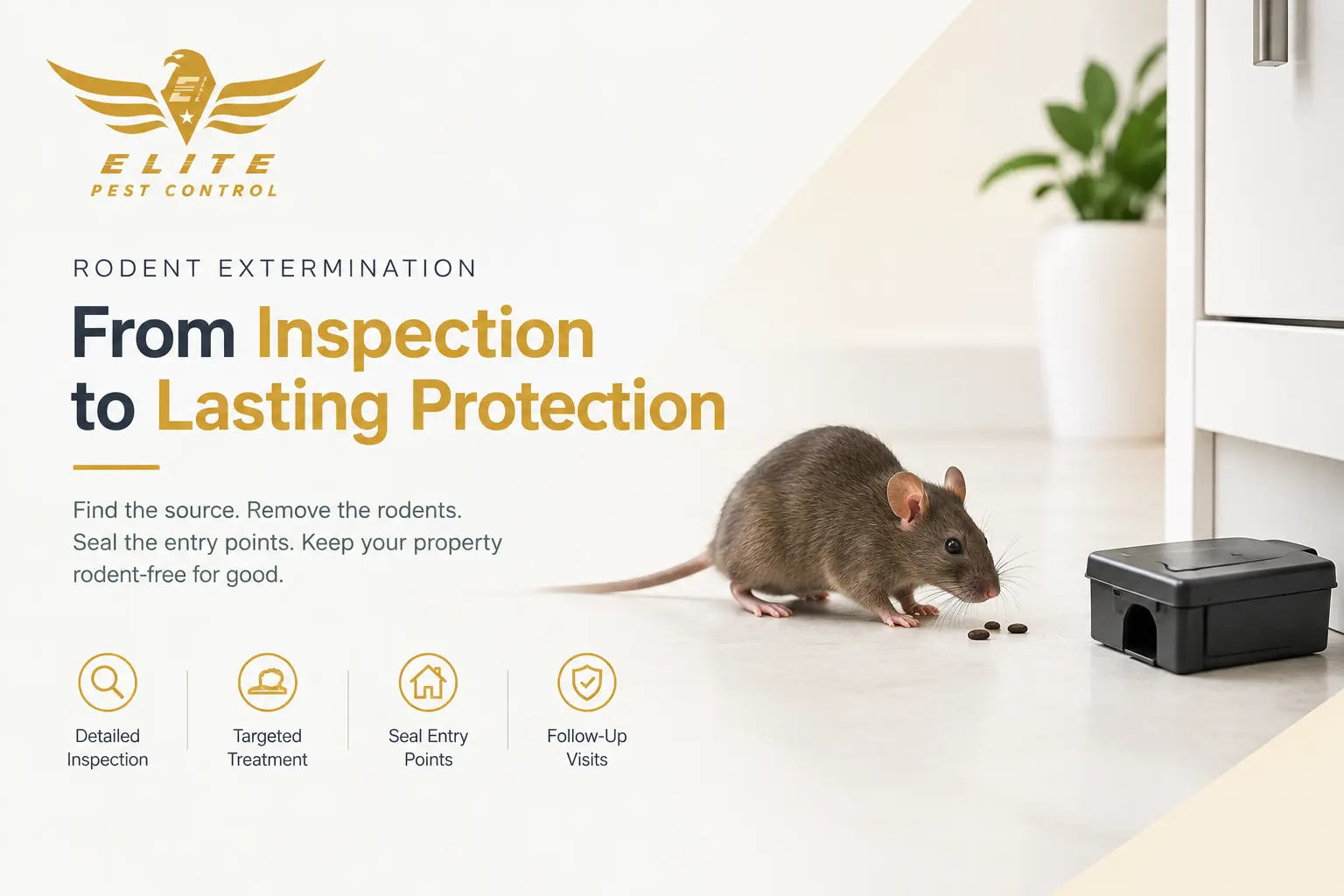
A rodent exterminator visit starts with a detailed inspection to find entry points, nesting activity, droppings, and signs of movement. The technician then places traps and bait at those specific locations, followed by follow-up visits to make sure the infestation is gone and new rodents cannot get back inside. Understanding each stage helps you know what you’re paying for and why professional treatment is often more effective than simply putting down a few traps.
The Inspection Comes First
A professional rodent treatment always begins with an inspection. The technician looks for signs such as droppings, gnaw marks, grease trails, nesting materials, damaged food packaging, and unusual sounds coming from walls or ceilings.
They also check common entry points around doors, windows, pipes, drains, vents, utility lines, roof areas, and gaps around the building. Rodents can fit through surprisingly small openings, so finding the actual access point is an important part of the process.
The technician may also look behind appliances, inside storage areas, under sinks, around kitchens, and along wall edges. These areas often reveal the routes rodents use when moving between their hiding places and food or water sources.
The goal is not simply to find where you saw a rat or mouse. It is to understand where the rodents are coming from, where they are hiding, and how they are moving through the property.
Treatment: Traps and Bait Are Placed Deliberately
Once the inspection is complete, the technician chooses the appropriate control method. Depending on the infestation, this may include mechanical traps, monitored bait stations, or a combination of both.
Instead of placing traps randomly around the property, professionals position them along confirmed rodent paths. Common locations include behind appliances, along walls, near suspected nesting areas, and close to entry points.
Bait stations can also be used in suitable areas where they can be safely monitored. Professional placement matters because rodents are cautious around unfamiliar objects. Simply putting bait in the middle of a room may not produce the expected results.
The technician also considers children, pets, food storage, and areas where people regularly move around when deciding where treatment equipment should be placed.
Sealing Entry Points Matters as Much as Trapping
Removing rodents already inside the property is only part of the solution. If an opening remains around a pipe, vent, door, roof, or wall, new rodents may eventually enter.
That is why exclusion is an important part of long-term rodent control. Small gaps and openings should be identified and sealed using materials appropriate for the location.
This can include gaps around utility pipes, damaged vents, openings beneath doors, cracks in walls, and other potential access points. The exact repair method depends on the size and location of the opening.
The CDC also recommends preventing rodents from entering homes by sealing gaps and eliminating sources of food and water. Rodents can spread diseases through contact with their urine, droppings, saliva, and contaminated materials, so controlling an infestation is about more than simply protecting the property from damage.
Follow-Up Checks Confirm the Problem Is Under Control
Rodent control often requires more than one visit. After traps or bait stations have been placed, a technician may return to check activity, remove captured rodents, replace or adjust treatment equipment, and look for any new signs of movement.
Follow-up inspections are particularly useful when the infestation is established or when rodents are entering from several areas.
If fresh droppings or new gnaw marks are still appearing, the technician can reassess the treatment and look for an overlooked entry point or nesting area.
A successful treatment should not only reduce visible rodent activity but also address the reason rodents were able to enter in the first place.
What You Can Do Before the Exterminator Arrives
You can make the inspection easier by keeping food sealed, cleaning up crumbs and spills, removing accessible pet food, and reducing unnecessary clutter around areas where rodents have been noticed.
Avoid moving traps or bait that a technician has already placed, as this can interfere with the treatment plan. If possible, make areas such as kitchens, storage rooms, under-sink spaces, and utility areas accessible for inspection.
If you’re still deciding whether the activity you’re seeing needs professional help or just better housekeeping, our guide on stopping rats and mice covers the early warning signs.
Our rodent control service handles the inspection, treatment, exclusion, and follow-up process described above. You can also review our complete services list if you’re noticing other pest problems at the same property.
FAQ
What happens during a rodent exterminator’s first visit?
The first visit normally begins with an inspection to identify droppings, nesting areas, entry points, and rodent movement. The technician then recommends and places appropriate traps or bait stations based on the findings.
How many visits does rodent extermination usually take?
The number of visits depends on the size and severity of the infestation. Many treatments require an initial visit followed by one or more checks to confirm that activity has stopped.
Do I need to leave my home during rodent treatment?
Usually, you do not need to vacate the property for standard rodent control involving traps and appropriately secured bait stations. Your technician should explain any specific safety instructions before treatment begins.
Will a rodent exterminator seal entry points too?
Exclusion is commonly included or recommended because trapping rodents without addressing access points can allow new rodents to enter. Gaps around pipes, vents, doors, foundations, and other openings may need to be sealed.
Are rodents actually a health risk, not just a nuisance?
Yes. Rodents can contaminate food and surfaces with urine, droppings, and other biological material. They can also cause property damage by gnawing on materials and electrical wiring, making prompt control worthwhile.
Written by the Elite Defence Pest Control team — municipality-approved pest control specialists serving Mussafah, Khalifa City, and greater Abu Dhabi.